
Best Fire Extinguisher Types for Different Fire Classes: A Complete Guide for Tamil Nadu Homes and Businesses
Not all extinguishers work on all fires. See which type - water, foam, CO2, dry chemical, or wet chemical - matches your fire class, room, and risk.
Fire doesn't wait for permission. A short circuit in your Chennai apartment, a gas leak in a Coimbatore textile unit, or an oil fire in a Trichy kitchen can spread in seconds. What decides whether that fire stays small or turns into a disaster is often the fire extinguisher sitting quietly in a corner.
But here's the problem. Most people buy "a fire extinguisher" without knowing something important. Different fires need different extinguishers. Use the wrong one, and you can make things worse. Spray water on a grease fire, and burning oil can fly across the kitchen. Use the wrong agent on live wiring, and you risk a shock.
This guide breaks down every fire class. It shows you the right extinguisher for each one. And it helps you pick the right type for your home, shop, factory, or office - whether you're in a Chennai high-rise, a Coimbatore mill, a Trichy shop, or a Hosur industrial unit.
What Are Fire Classes, and Why Do They Matter?
Fires are grouped into classes based on what's burning. This matters a lot. Each fuel type reacts differently to water, foam, gas, or powder. India follows the Bureau of Indian Standards (IS 2190) for this. It's broadly similar to systems like NFPA used in other countries.
Class A – Ordinary items like wood, paper, cloth, and household trash. This is the most common fire type in Indian homes and offices.
Class B – Flammable liquids and gases. Think petrol, diesel, paint thinner, and cooking gas. Very common in garages and workshops. You'll see this risk often around Hosur and Coimbatore industrial areas.
Class C – Fires involving live electrical equipment, wiring, or appliances. A short circuit fire falls in this class.
Class D – Fires involving metals like magnesium, aluminium powder, or titanium. Rare in homes. But it's a real risk in metal fabrication units, common across the Hosur belt.
Class K – Cooking oil and fat fires. Typical in restaurant kitchens and hotels. More home kitchens face this risk too, thanks to deep fryers.
Knowing your fire class is step one. Knowing which extinguisher works on it is step two.
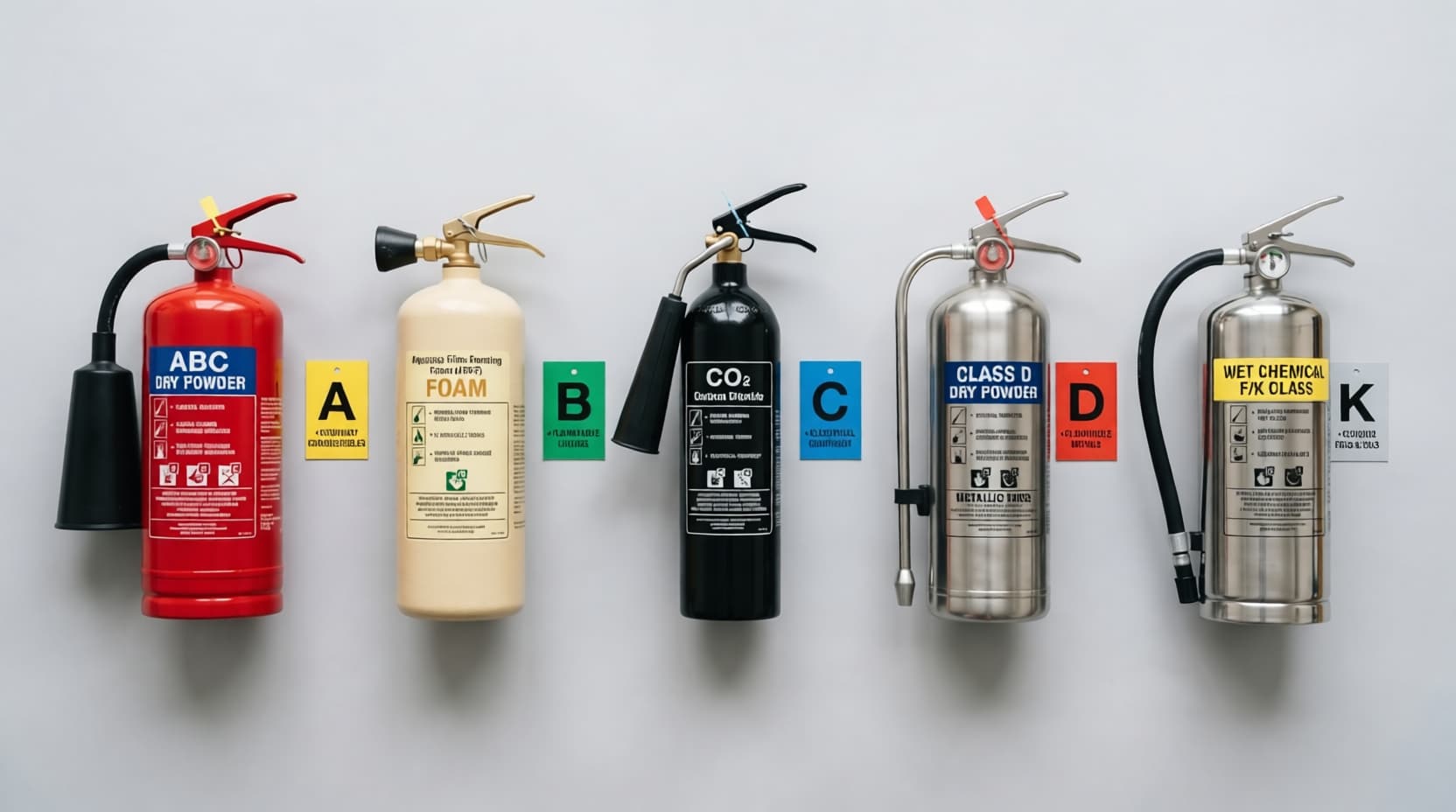
Fire Class and Extinguisher Comparison Table
|
Fire Class |
What's Burning |
Best Extinguisher Type |
Extinguishing Agent |
Never Use |
|
A |
Wood, paper, cloth, waste |
Water or ABC Dry Powder |
Water / Monoammonium phosphate |
— |
|
B |
Petrol, diesel, paint, solvents |
Foam or CO2 or Dry Powder |
AFFF Foam / Carbon Dioxide |
Water |
|
C |
Live wiring, appliances, electronics |
CO2 or Dry Powder |
Carbon Dioxide / Dry Chemical |
Water, Foam |
|
D |
Magnesium, aluminium, titanium |
Class D Powder |
Special metal powder |
Water, standard ABC types |
|
K |
Cooking oil, ghee, deep fryers |
Wet Chemical |
Potassium-based solution |
Water, standard ABC types |
Keep this table close by. A single ABC extinguisher is the most common type sold in Tamil Nadu. It covers Class A, B, and C fires. But it won't handle a Class D metal fire. And it won't safely handle a Class K kitchen oil fire either.
Extinguisher Types Explained Simply
Water Extinguishers
Water cools the fire down, which stops it from starting again. It only works on Class A fires - wood, paper, cloth. Never use it on electrical or oil fires, since water conducts electricity and spreads burning oil instead of putting it out.
Foam Extinguishers
Foam spreads a blanket over the fuel. This cuts off oxygen while cooling the fire down. It works well on Class A and Class B fires. You'll find it useful in garages, fuel stores, and workshops. It's not safe for live electrical fires, unless the label says so.
CO2 Extinguishers
Carbon dioxide pushes oxygen away from the fire and leaves no residue behind, which makes it ideal for Class B and Class C fires. It's especially useful around computers, server rooms, and electrical panels - you'll find these in many of Chennai's IT parks and corporate offices.
Dry Chemical (ABC) Extinguishers
This is the extinguisher most Tamil Nadu homes and small businesses should own. It works on Class A, B, and C fires. It breaks the chemical reaction that keeps a fire alive. One ABC unit near your kitchen or main hall covers most everyday risks.
Wet Chemical Extinguishers
These are built for Class K fires - burning cooking oil and fat. The chemical reacts with hot oil. It forms a soapy layer that cools the oil and seals it from air. Every commercial kitchen in Chennai, Coimbatore, and Trichy needs one near the stove.
Class D Powder Extinguishers
These are made for burning metals. Water on a magnesium or titanium fire can cause a violent reaction. This special powder smothers the fire safely instead. Metal units around Hosur, where metal dust is common, should keep these on hand.
Clean Agent Extinguishers
These use a gas that leaves no residue, which protects sensitive electronics from damage. Data centres, server rooms, and labs often use clean agent systems, a growing sector across Chennai and Coimbatore today.
Which Extinguisher Fits Your Situation?
Homes in Chennai, Coimbatore, and Trichy
A standard ABC dry powder extinguisher covers most household risks. Do you use a deep fryer often? Add a small wet chemical unit near the stove too.
Apartment Complexes and High-Rises
Common areas need ABC extinguishers near stairwells and lift lobbies. This matters more as Chennai's apartment culture keeps growing. Follow local fire spacing rules for placement.
Textile Mills and Garment Units (Coimbatore, Tiruppur belt)
Cotton dust and fabric raise Class A risk. Foam or ABC extinguishers work well here. Pair them with good housekeeping to cut down on lint buildup.
Restaurants and Hotels (All Cities)
A wet chemical extinguisher near every cooking station is not optional. It's often required for a fire NOC from the Tamil Nadu Fire and Rescue Services Department.
Metal Fabrication and Engineering Units (Hosur Industrial Area)
Class D extinguishers are a must wherever grinding, welding, or machining happens. Pair these with standard ABC units for general workshop safety.
IT Parks and Offices (Chennai, Coimbatore)
CO2 or clean agent extinguishers protect server rooms and hardware. They do this without leaving damaging residue behind.
Vehicles and Petrol Pumps
Every vehicle should carry a compact ABC or dry powder extinguisher. It should be rated for fuel and electrical fires. This is also mandatory at fuel stations across Tamil Nadu.
How Many Extinguishers Do You Need, and Where Should They Go?
The Tamil Nadu Fire and Rescue Services Department sets rules for extinguisher placement. So does the National Building Code of India. These rules depend on floor area and building type. As a general guide:
- Place one extinguisher within 15 metres of any point on a floor.
- Mount extinguishers about 1 to 1.5 metres off the ground, close to exits. Never hide them behind furniture or in cupboards.
- Kitchens need a dedicated wet chemical unit. Keep this separate from general-purpose extinguishers.
- Businesses in Chennai, Coimbatore, Trichy, and Hosur should check exact rules with their local fire department. Rules change based on building height, use, and occupancy.
Running a business? Get a fire safety audit done locally. Fire safety consultants in Chennai and Coimbatore can guide you on extinguisher choice and NOC rules.
Maintenance: An Extinguisher You Never Check Won't Save You
Owning the right extinguisher isn't enough. It needs regular care too.
- Every month: Check the pressure gauge. Look for dents or rust. Make sure nothing blocks it.
- Every year: Get it inspected by a licensed fire safety vendor.
- Every 5 years: Dry chemical extinguishers usually need internal servicing.
- Every 10 years: Hydrostatic pressure testing is needed. This confirms the cylinder is still safe.
Replace an extinguisher right away if the gauge shows low pressure. Do the same if the safety pin is missing, or the body shows rust. Chennai's humid coastal air makes rust checks even more important than in drier regions.
How to Use a Fire Extinguisher: The PASS Method
In an emergency, remember four simple steps:
- Pull the safety pin.
- Aim low, at the base of the flames, not the smoke.
- Squeeze the handle slowly and steadily.
- Sweep side to side until the fire is fully out.
Only fight a fire that is small and contained. Always keep a clear path behind you to exit. If the fire spreads, or you're unsure, leave right away and call the fire department.
Frequently Asked Questions
Can I use a water extinguisher on an electrical fire?
No. Water conducts electricity and can cause a serious shock. Use a CO2 or dry powder extinguisher instead. Cut the power first, if it's safe to do so.
Is one ABC extinguisher enough for a Tamil Nadu home?
For most homes, yes. It covers wood, paper, fuel, and electrical fires. Deep fry often? Add a wet chemical unit near the stove for extra safety.
Do textile units in Coimbatore need special fire equipment?
Yes. Cotton dust and fabric burn fast and spread quickly. ABC or foam extinguishers help here. Good housekeeping matters too. Larger units may also need sprinkler systems under fire code.
Is a fire extinguisher required for a fire NOC in Tamil Nadu?
Yes, in most cases. The Tamil Nadu Fire and Rescue Services Department asks for the right extinguishers, signage, and maintenance records. This is part of the NOC process for commercial buildings.
How often should I replace my fire extinguisher?
Most extinguishers last 10 to 15 years with proper care. Always follow the maker's guidance. Get it inspected every year.
Do I need a Class D extinguisher for my home?
Almost never. Class D risk applies to industrial and metalworking sites, like fabrication units around Hosur. Most homes don't face this risk.
Final Word: Match the Extinguisher to the Risk
The right fire extinguisher isn't the biggest one or the most expensive one. It's the one built for the fires you're most likely to face. A Chennai apartment, a Coimbatore mill, a Trichy restaurant, and a Hosur fabrication unit all carry different risks. Each one deserves a setup that fits its reality.
Look around you. Do you see cooking oil, wiring, fuel, fabric, or metal? Pick your extinguisher type based on that risk. Place it where you can reach it fast. Check it often. That small step, taken today, can be the difference between a minor scare and a major loss.
This guide is for general awareness. For commercial properties, always confirm fire safety rules with the Tamil Nadu Fire and Rescue Services Department or a licensed fire safety consultant like Technique Engineers.


