
What You Should Know about the Importance of Fire Alarm Backup Batteries for Fire Safety in India:
Learn why fire alarm backup batteries are critical in India. Covers power outages, battery types, fire code rules, failures, and safety compliance.
Fire alarms can only protect you if they are connected to a power supply. Unfortunately, in India, there are frequent power outages throughout the year from storms, cyclones, overloading, transformer failure and maintenance shutdowns. That also means that there are many instances of fires taking place due to those same types of events.
When power goes out, an entire fire alarm system must rely on a backup battery power supply. If this battery fails, smoke will not be detected, and alarms will fail to sound. This can mean that individuals inside a building may not get adequate warning to escape.
For those building owners and safety officers/managers in India, fire alarms and backup batteries are not simply a legal requirement; they are also a primary safety need.
Key Elements to Think About
- Fire alarm backup batteries will immediately energise upon the loss of the utility power.
- The majority of battery failure is due to age, exposure to heat, or improper charging.
- Sealed Lead Acid Batteries are typically good for 3 – 5 years; whereas, Lithium-Ion Batteries can last 8 – 10 years.
- Regular inspection, testing and record keeping of fire alarm systems are required by Indian fire codes.
Fire Alarm Backup Battery Explained
A fire alarm backup battery provides an independent source of power to a fire alarm control panel when the main electrical supply fails. When the primary power source goes offline, the battery takes over almost instantaneously (in less than 1 millisecond) without any manual intervention.
In India, the vast majority of fire alarm systems rely on sealed lead-acid batteries. However, some newer systems may use lithium-ion technology in various types of modern commercial construction.
Why Backup Batteries are Not the Same as Generators
Many large commercial buildings in India also use diesel-powered generator sets. However, a generator cannot take the place of a backup battery. Although some systems can start quickly, even a very fast-starting system will take at least 10 or 30 seconds to provide power. Conversely, a fire alarm battery will start providing power immediately.
As such, Indian fire safety regulations require that fire alarms have battery backup regardless of whether or not the building is equipped with a generator. Therefore, a fire alarm battery will provide the power necessary to operate a fire alarm system during the initial critical period following an electrical outage. The generator will provide support to operate the fire alarm system thereafter if necessary.
The Importance of Backup Batteries for Buildings in India
Many cities and towns in India face constant power outages and blackouts due to infrastructure issues, particularly during the monsoon season, when the weather can result in lengthy power outages that can last hours (or even a whole day). In fact, power outages in rural and semi-urban India occur quite frequently.
In addition to inclement weather, power outages can also be caused by equipment failures and other natural disasters (e.g., storms and flooding) that often create additional dangers of fire.
According to the Indian Fire Code, fire alarm systems must have a minimum of 24 hours of battery backup. They must be capable of providing fire alarm notification during extended outages to provide adequate time for emergency response and evacuation.
Different Battery Types Available for Fire Alarms in India
1. Sealed Lead Acid Battery
Sealed lead acid batteries dominate the Indian market as they can be easily found, cost less than other types of batteries, and are compatible with most fire alarm panels.
While they generally last between 3 and 5 years, they perform at their best when installed inside a space that has sufficient airflow and a temperature that doesn’t fluctuate too drastically. To potentially avoid sudden battery failure, these batteries should be regularly tested and maintained.
2. Lithium Ion Battery
Lithium-ion batteries are now becoming popular for fire alarm systems in multi-storey buildings, IT parks, hospitals, and airports.
Compared to lead acid batteries, lithium-ion batteries have better longevity, the ability to withstand varying temperatures, faster recharge rates, are significantly lighter, and ultimately require much fewer replacements over time.
However, they do come at a higher overall cost than lead acid batteries, but in some instances, there may be cases where the fire alarm panel must be upgraded to accommodate lithium-ion battery use.
Selecting the Right Battery
Before selecting a suitable backup battery, a few things need to be taken into consideration:
1) Systems Load
Calculate the total wattage of all Detectors, Hooters, Control Panels or Communicating Devices. The battery should supply enough battery power to operate the fire alarm system for a minimum of 24 hours, plus the time to respond to an alarm.
2) Location of Panel
Fire Alarm Panels located in basements, electrical rooms or on roofs are likely to be subjected to higher-than-normal heat; therefore, a temperature-resistant battery may outlast a reduced temperature-rated battery.
3) Cost to Replace
You may be saving money by purchasing less expensive batteries and replacing them as needed. However, over time, this can cost you more in total.
4) Compatibility with the Panel
Always verify that your fire alarm panel is compatible with the battery type that you have selected.
Common Reasons for Battery Failure in India
Aging and wear
High ambient heat, dust and humidity can accelerate battery aging and wear. Due to extreme conditions at a site, many batteries will fail sooner than they normally would.
Temperature
Batteries inside fire panels installed next to DG sets, lift shafts, and in poorly ventilated rooms, will suffer from thermal degradation more quickly than other batteries. Heat is one of the greatest enemies of batteries.
Charging Issues
Charging cycles can be interrupted/affected due to an unstable power supply and fluctuations in voltage; this can cause the ability of the battery to store energy become diminished.
Common Warning Signs to Look For
- Repeated beeping/alerts from the fire panel.
- Battery fault/trouble indication shown on the display.
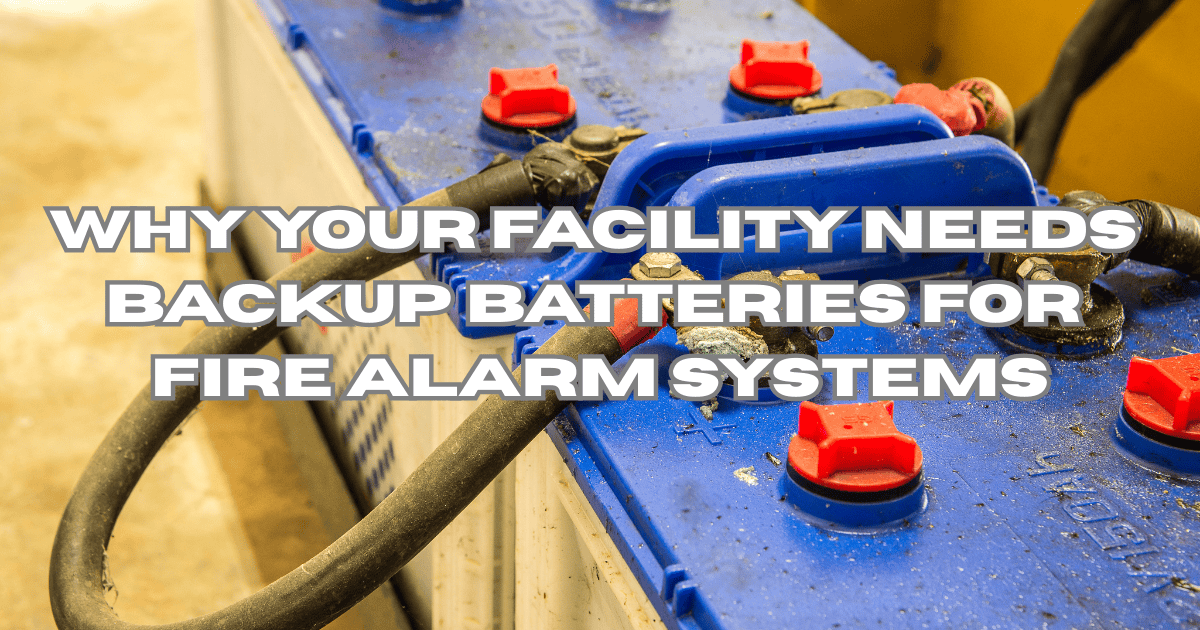
- Corrosion was found on battery terminals.
- Swollen/leaking battery case.
Not paying attention to these warning signs leads to a total failure of the battery when needed to operate in an emergency.
Rules for fire safety and compliance in India
The batteries used to power fire alarms are established by the Building Code of India and the Bureau of Indian Standards, including IS 2189.
The key requirements include:
- Monthly visual inspections of the batteries;
- Yearly load testing of the batteries; and
- Keeping proper records of the inspections and tests.
Fire departments and local authorities verify that these records exist during inspections, or they may issue notices, fines, or hold up approvals on buildings until the proper documentation is provided.
Insurance companies also require evidence that these systems are, in fact, maintained, to process any of their claims arising from a fire event. Therefore, if you do not have proper records to show maintenance of your fire alarm system’s batteries, your insurance claim, if you experience a loss, will also be affected.
Ready Your Fire Alarm for Power Outages
Fire alarm backup batteries should be a non-negotiable requirement for anyone who lives in India, where there are regular interruptions to the electricity supply. They are critical for a fire safety program, particularly if you are in an area where electricity supply problems are frequent.
You may not know whether your fire alarm will work properly when you need it most without performing regular test operations, replacing batteries at the end of their useful life, and selecting the appropriate replacement batteries.
Don't wait until you have lost power to find out your fire alarm has a malfunction! Have your fire protection company or local fire alarm provider conduct routine inspections of your system. Fire safety is all about preparing yourself for the worst-case scenario, and your life could be saved by having a properly functioning backup battery.


