
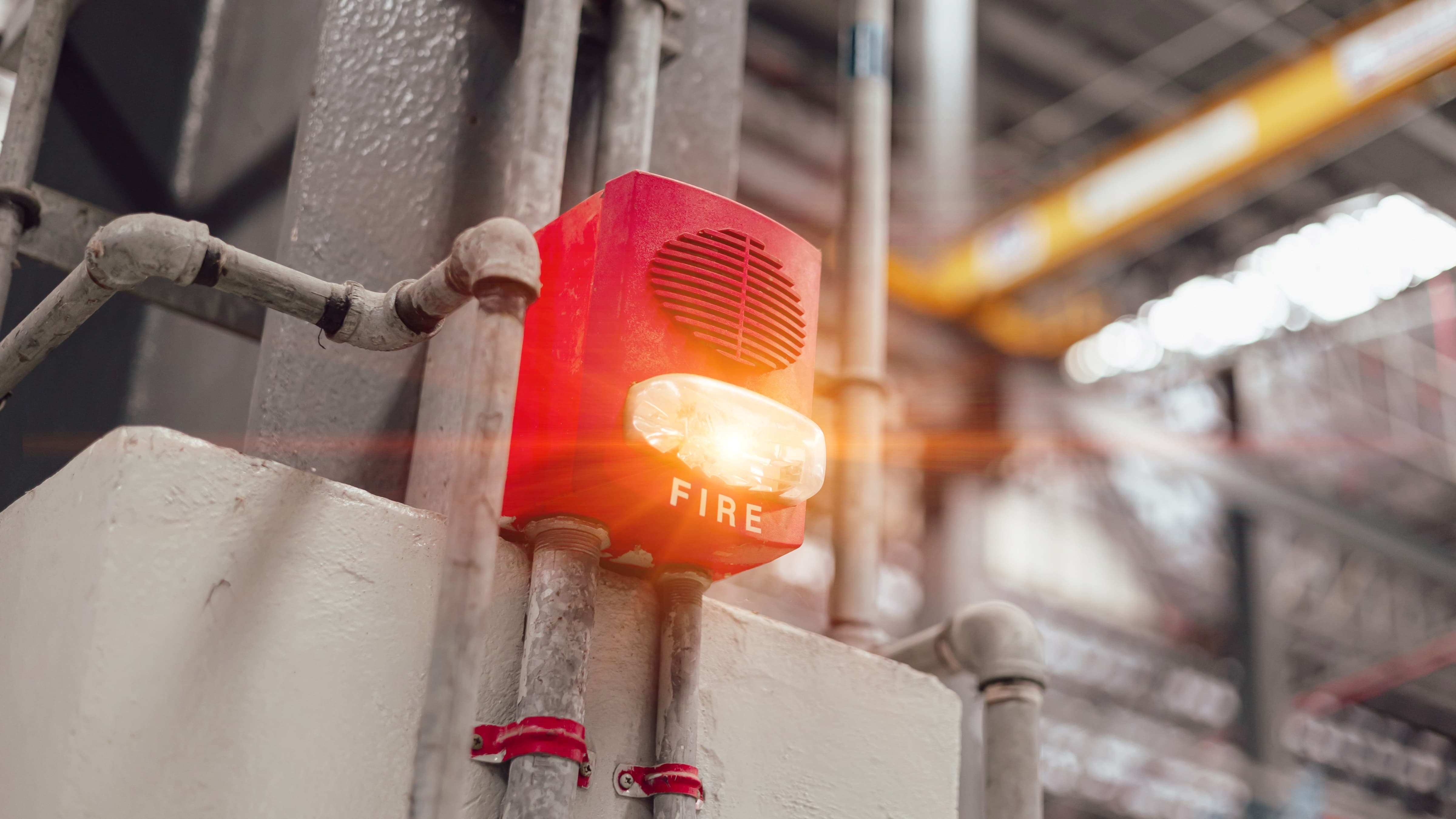
Fire Alarm System in Hosur: A Complete Guide for Industrial Facilities
Get NFPA-compliant fire alarm system installation in Hosur for factories, warehouses & hospitals. Design, AMC & support by Technique Engineers.
If your factory, warehouse or commercial building in Hosur doesn't have a properly designed fire alarm system, you're carrying a risk that's both preventable and, in most cases, legally required to fix. A good fire alarm system in Hosur detects fire within seconds, alerts your team before it spreads, and keeps you compliant with fire safety regulations under the National Building Code and factory safety rules. This guide covers what a fire alarm system actually does, which type your facility needs, what it costs to get wrong, and how Technique Engineers designs and installs these systems across Hosur and the surrounding industrial belt.
The Problem: Fires Don't Wait for You to Notice
Industrial fires rarely announce themselves. A short circuit in a control panel, an overheated motor, or a spark near flammable storage can turn into a serious incident in minutes - and by the time smoke is visible to the human eye, early detection equipment should already have triggered a response. This isn't a theoretical risk. India loses an estimated 25,000 lives to fire-related incidents every year, on average, and a 2013 Fire Risk Survey by Pinkerton and FICCI found that fire ranks among the top five risks facing Indian industry. For manufacturing and warehouse facilities specifically, the survey found fire risk sits even higher on the list.
The honest reality is that most fire damage in Indian factories isn't caused by the fire itself - it's caused by the delay between ignition and detection. A properly working setup closes that gap.
The Solution: What a Fire Alarm System Actually Does
A fire alarm system is a network of detectors, control panels, and alert devices designed to identify smoke, heat, or flame at the earliest possible stage and notify occupants and facility staff immediately. It's not a single product - it's an engineered setup, and getting the design right matters as much as the equipment itself.
Core Components
|
Component |
Function |
|
Fire Alarm Control Panel |
The central brain of the system — receives signals from detectors and triggers alarms |
|
Smoke & Heat Detectors |
Identify early signs of fire in ceilings, corridors and equipment rooms |
|
Manual Call Points |
Allow staff to trigger the alarm manually if they spot a fire directly |
|
Sounders & Strobes |
Alert occupants audibly and visually, including in high-noise industrial areas |
|
Wiring & Zone Modules |
Connect detectors to the panel and identify which zone or floor triggered the alert |
Conventional vs Intelligent Addressable Fire Alarm Systems
This is usually the first real decision a facility manager has to make, and it depends heavily on the size and layout of your site.
Conventional systems divide a building into zones, and when a detector triggers, the panel tells you which zone the alarm came from - not the exact device. These work well for smaller facilities, single-floor units, or buildings where quick manual verification is easy.
Intelligent addressable setups identify the exact detector that triggered, down to the individual device. For larger factories, multi-building campuses, or facilities where every minute of response time matters, this precision is the difference between a five-minute investigation and a five-second one.
Fire alarm and signalling systems in India are generally designed around NFPA 72 guidelines alongside the Indian Standard IS 2189, which sets out requirements for automatic fire detection and alarm systems. A properly engineered system should be designed against both, not just installed to a generic checklist.
Where These Systems Are Used
Fire detection setups aren't optional extras - they're a baseline requirement across most commercial and industrial occupancies:
- Manufacturing plants and factories
- Warehouses and logistics facilities
- Hospitals and healthcare institutions
- Educational institutions
- Data centres and server rooms
- Multi-storey commercial buildings
Each of these has different risk profiles. A warehouse storing flammable materials needs a different detection strategy than a hospital ward, and a data centre often needs early-warning aspirating smoke detection layered on top of standard coverage. This is exactly why a generic; off-the-shelf approach usually falls short - the design has to match the actual hazard.
What Happens If You Get This Wrong
Facilities that install undersized or poorly designed detection setups tend to run into the same three problems repeatedly:
- False alarms from cheap or poorly placed detectors, which eventually cause staff to start ignoring the system altogether - the single most dangerous outcome of a badly designed setup.
- Compliance failures during fire safety audits or NOC renewal, which can delay operations or trigger penalties under factory safety regulations.
- Slow detection in critical areas because the system wasn't zoned or engineered around the facility's actual layout and risk points.
None of these are equipment problems - they're design and installation problems. This is where working with a fire protection specialist, rather than a generic electrical contractor, makes a measurable difference.
Why Facilities in Hosur Choose Technique Engineers
Technique Engineers designs, supplies and installs conventional and intelligent addressable detection systems for factories, warehouses, hospitals and commercial buildings across Hosur and the Krishnagiri industrial belt. Every setup we design is engineered against NFPA-aligned standards and matched to the actual hazard profile of your facility - not just dropped in as a generic panel-and-sensor package.
Beyond installation, we also handle ongoing Fire Alarm AMC, so your system stays tested, serviced, and audit-ready year-round instead of being forgotten the day after commissioning.
Frequently Asked Questions
How do I know if my facility needs a conventional or addressable setup?
It mostly comes down to size and layout. If you're running a single-floor unit or a smaller warehouse, a conventional panel is usually enough and costs less to install. Once you're dealing with multiple buildings, several floors, or a facility where pinpointing the exact source of an alarm matters, addressable detection is worth the extra investment. Honestly, the best way to know for sure is to have someone walk your site and look at it properly — a quick site visit tells you more than any guide can.
Is a fire alarm system legally required for factories in Tamil Nadu?
Yes, in most cases. Factories are required to have fire detection and alarm provisions under the Factories Act and related state fire safety rules, and it's also usually a condition for getting or renewing your Fire NOC. If you're not sure where your facility currently stands, it's worth getting an audit done rather than assuming you're covered.
How often should this equipment be tested?
As a general rule, monthly visual checks and a full functional test every quarter is a reasonable baseline for industrial sites, with a more thorough annual service. That said, high-risk facilities or ones with a lot of dust and vibration (common in manufacturing) sometimes need more frequent checks, since sensors can get fouled faster than people expect.
What's the difference between a fire alarm system and a fire suppression system? A fire alarm system detects and alerts - it tells you a fire is happening and where. A suppression system (like sprinklers, gas suppression, or foam systems) is what actually puts the fire out or controls it. Most facilities need both working together, not one instead of the other.
Can Technique Engineers upgrade an existing setup instead of a full replacement?
In many cases, yes. If the underlying wiring and zoning are still sound, we can often upgrade panels or add addressable detection to specific high-risk areas rather than ripping everything out. It really depends on the condition of what's already there, so this is another one best answered after a site visit.
Technique Engineers provides complete fire and life safety solutions - including fire alarm systems, fire hydrant systems, sprinkler systems, and AMC services - for industrial and commercial facilities across Hosur and Krishnagiri. Contact us for a fire alarm system assessment for your facility.


