
Fire Protection System Cost in India (2026) – Detailed Breakdown
Get a complete breakdown of fire protection system cost in India for 2026 – alarm, sprinkler, hydrant & suppression prices with Tamil Nadu city-wise rates.
Why Fire Protection Costs Vary Widely Across India
India records over 3,00,000 fire incidents every year. That number comes from the National Crime Records Bureau - and it does not include the thousands of small fires that go unreported. Tamil Nadu alone logged more than 8,400 fire cases in 2023. Factories, hospitals, apartments, IT parks, and warehouses - all of them burned.
Yet when a building owner in Chennai or Coimbatore sits down to budget for a fire protection system, they hit a wall. Contractor quotes vary by lakhs. One vendor says ₹3 lakh. Another says ₹12 lakh. No one explains why.
The truth? Fire protection is not a single product. It is a group of different systems - alarms, sprinklers, suppression agents, hydrants - each with its own cost logic. Building size, floor count, occupancy type, local regulations, and brand tier all move the needle in a big way.
This guide breaks it all down by system type, city, and use case. Whether you are a facility manager in Chennai planning a fire NOC, a developer building a commercial complex in Coimbatore, or a factory owner in Madurai looking for compliance, you will leave with actual numbers - not vague ranges.
What Is a Fire Protection System? (Types and Components Explained)
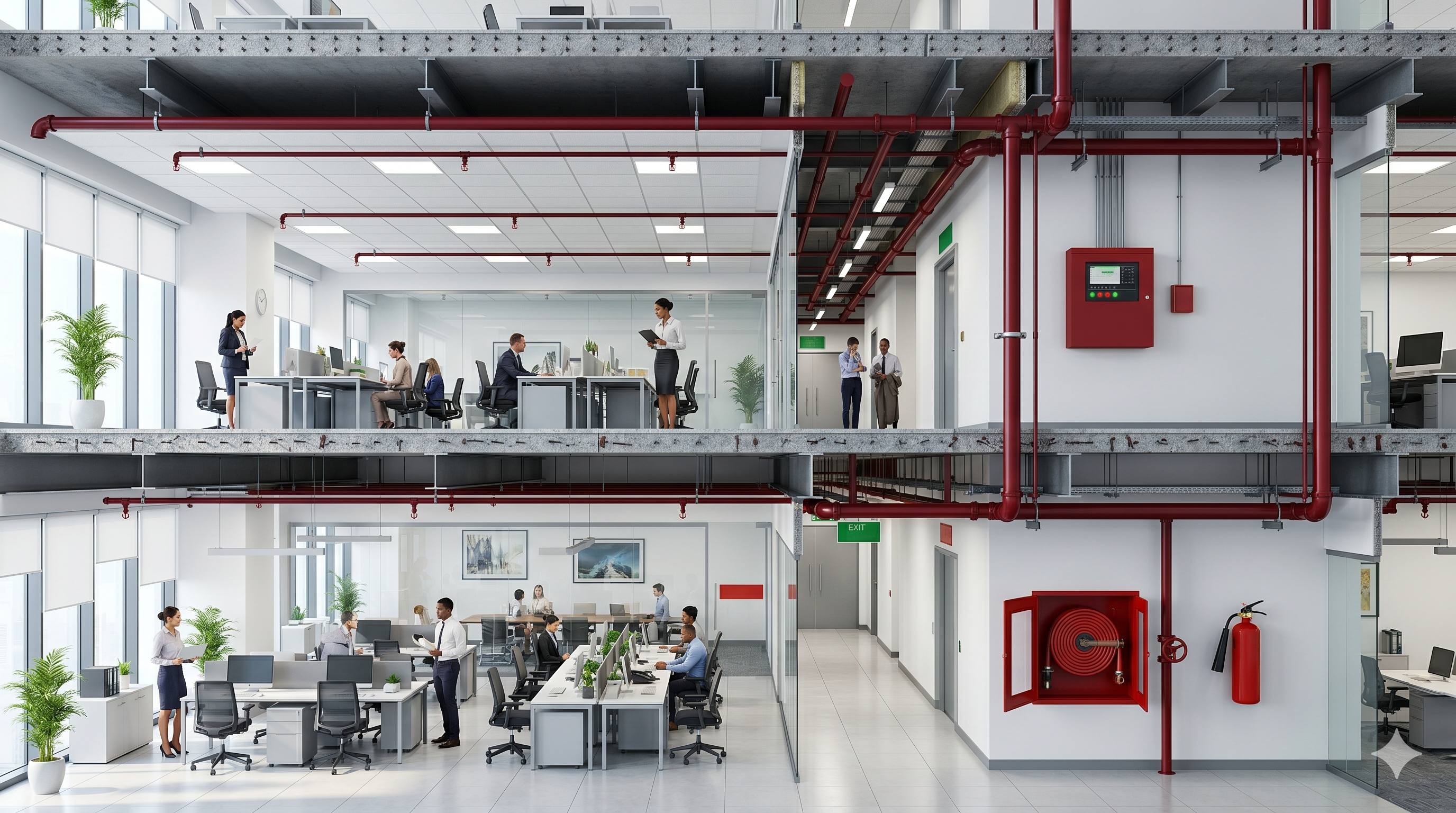
A fire protection system is any combination of equipment and infrastructure designed to detect, control, or suppress a fire inside a building. Think of it as a layered safety net - each layer catching what the one before it missed.
There are five main types used across India:
- Fire Alarm Systems - Smoke and heat detectors connected to a central control panel. These detect a fire early and alert occupants so they can evacuate. They are the most common starting point for most buildings.
- Fire Sprinkler Systems - A network of water pipes fitted with sprinkler heads. When heat reaches a set threshold, the sprinklers activate automatically and douse the fire at the source.
- Fire Suppression Systems - Used in places where water would damage equipment, like server rooms and data centres. These systems use gases such as FM200, CO2, or Novec 1230 to kill the fire without destroying electronics or documents.
- Fire Hydrant Systems - A pressurised water supply network installed throughout a building. Firefighters and trained staff use these hose reels and hydrant points to fight large fires.
- Portable Fire Extinguishers - The most basic tool in the chain. ABC powder, CO2, and foam extinguishers placed at key points. They handle small, early-stage fires before they spread.
Most buildings in India need a mix of these systems - not just one. The exact combination depends on building type, size, and the applicable regulations under the National Building Code 2016.
Fire Alarm System Cost in India (2026) – With Installation
Fire alarm systems split into two categories: conventional and addressable. The difference matters a lot - both for functionality and for cost.
Conventional Fire Alarm Systems work zone by zone. A panel shows which zone triggered the alarm, but not which specific detector. These work well for small buildings with simple layouts.
- Small buildings (up to 5 zones): ₹15,000 – ₹40,000 installed
- Cost per detector point: ₹1,200 – ₹2,000
Addressable Fire Alarm Systems identify the exact detector that triggered. The panel shows the precise location - Room 302, Corridor B, Server Room 1. These are used in commercial buildings, hospitals, malls, and factories.
- Mid-size commercial building: ₹50,000 – ₹1,50,000
- Large commercial or industrial projects: ₹2,00,000 – ₹5,00,000+
- Cost per addressable detector point: ₹2,000 – ₹3,500
Brand Tier Breakdown:
|
Tier |
Brands |
Cost Range per Point |
|
Basic |
Agni, Hochiki (entry-level) |
₹1,200 – ₹1,800 |
|
Mid-Range |
Nittan, Morley, Notifier |
₹1,800 – ₹2,800 |
|
Premium |
Honeywell, Siemens, Bosch |
₹2,800 – ₹3,500+ |
Installation labour in Tamil Nadu typically adds 20–30% to equipment costs. For a 10,000 sq. ft. commercial building with 40 detector points, expect a total installed cost of ₹1,20,000 – ₹2,50,000 depending on the system type and brand chosen.
Annual Maintenance Contracts (AMC) for fire alarm systems run between ₹8,000 – ₹40,000 per year, depending on system size and brand.
Fire Sprinkler System Cost in India – Per Sq. Ft. Pricing
Sprinkler systems cost more than alarms, but they can actually stop a fire - not just warn you about one. Costs vary by the type of system and the building category.
Wet Pipe Sprinkler Systems - Always filled with water. Simplest design, fastest response. Best for offices, hotels, malls, and residential towers where there is no freezing risk.
- ₹50 – ₹120 per sq. ft. (material + labour, installed)
Dry Pipe Sprinkler Systems - Pipes filled with compressed air. Water rushes in only when a sprinkler head opens. Used in parking structures, cold storage areas, and spaces prone to pipe freezing.
- ₹80 – ₹150 per sq. ft.
Deluge Systems - All sprinkler heads open at once, flooding the area. Used in high-hazard zones like warehouses storing flammable goods, aircraft hangars, and chemical plants.
- ₹80 – ₹200 per sq. ft.
Cost Breakdown by Building Type:
|
Building Type |
Sprinkler Type |
Estimated Cost (per sq. ft.) |
|
Residential apartment |
Wet pipe |
₹50 – ₹80 |
|
Office/IT building |
Wet pipe |
₹70 – ₹100 |
|
Retail mall |
Wet pipe |
₹80 – ₹120 |
|
Warehouse / factory |
Deluge |
₹100 – ₹200 |
Annual Maintenance (AMC): Budget 4–6% of the total installation cost per year. On a ₹5 lakh sprinkler installation, that is ₹20,000 – ₹30,000 annually for inspections, pressure tests, and head replacements.
Keep in mind that material alone (pipes, sprinkler heads, valves) makes up about 55–65% of the project cost. Labour and commissioning take the rest.
Fire Suppression & Hydrant System Costs – Industrial & Commercial
Some environments cannot use water at all. Server rooms, electrical substations, museums, and archive rooms need a different approach. That is where gaseous suppression systems come in.
Gaseous Suppression Systems
FM200 (HFC-227ea) - The industry standard for server rooms and data centres. Suppresses fire in under 10 seconds. Non-toxic and leaves no residue.
- Server room up to 50 cubic metres: ₹1,50,000 – ₹3,50,000
- Larger rooms or multiple cylinders: ₹4,00,000 – ₹8,00,000
Novec 1230 (FK-5-1-12) - Environmentally safer than FM200. Low global warming potential. Preferred for high-value asset protection.
- Typical range: ₹2,50,000 – ₹8,00,000 depending on room volume and cylinder count
CO2 Suppression Systems - Lower cost, but CO2 is dangerous to humans and requires evacuation before discharge. Used in unmanned areas like electrical switch rooms and generator enclosures.
- Small unmanned room: ₹80,000 – ₹1,50,000
- Large generator or machine room: ₹2,00,000 – ₹4,00,000
Fire Hydrant Systems
Hydrant systems form the backbone of firefighting in medium and large buildings. They consist of underground and overhead tanks, fire pumps, riser pipes, hose reels, and hydrant valves at each floor.
- Per riser (single vertical pipe run): ₹1,20,000 – ₹3,50,000
- Complete hydrant system for a 5-floor commercial building: ₹4,00,000 – ₹10,00,000
- Factory or warehouse with external hydrant ring main: ₹6,00,000 – ₹18,00,000+
Pump sets, jockey pumps, and diesel back-up pumps add ₹1,50,000 – ₹4,00,000 depending on flow requirements.
Fire Protection System Cost Comparison Table (2026)
This table gives you a clear side-by-side view of all major fire protection systems used in India. Use it to shortlist what your building needs before getting contractor quotes.
|
System Type |
Best For |
Typical Cost Range |
Cost Per Sq. Ft. |
AMC Cost (Annual) |
Compliance Required |
|
Conventional Fire Alarm |
Small offices, shops, homes |
₹15,000 – ₹40,000 |
₹8 – ₹20 |
₹5,000 – ₹15,000 |
NBC 2016 Part 4 |
|
Addressable Fire Alarm |
Malls, hospitals, IT parks |
₹50,000 – ₹5,00,000 |
+₹20 – ₹60 |
₹15,000 – ₹40,000 |
NBC 2016 + Fire NOC |
|
Wet Pipe Sprinkler |
Offices, hotels, apartments |
₹5,00,000 – ₹30,00,000 |
+₹50 – ₹120 |
4–6% of install cost |
NBC 2016 + TAC |
|
Deluge Sprinkler |
Warehouses, factories |
₹8,00,000 – ₹40,00,000 |
+₹80 – ₹200 |
4–6% of install cost |
NBC 2016 + TAC |
|
FM200 / Novec Suppression |
Server rooms, data centres |
₹1,50,000 – ₹8,00,000 |
N/A (volume-based) |
₹20,000 – ₹60,000 |
NBC 2016 + IS codes |
|
CO2 Suppression |
Generator rooms, switch rooms |
₹80,000 – ₹4,00,000 |
N/A (volume-based) |
₹15,000 – ₹40,000 |
NBC 2016 |
|
Fire Hydrant System |
Mid to large commercial, industrial |
₹4,00,000 – ₹18,00,000 |
+₹30 – ₹80 |
₹25,000 – ₹80,000 |
Mandatory for buildings >15 m height |
Factors That Affect Fire Protection System Cost in India
Two buildings of the same size can have very different fire system budgets. Here is what moves the price up or down.
1. Building Occupancy Type
A residential apartment has a different risk profile than a chemical factory. The National Building Code 2016 classifies buildings into occupancy groups - residential, educational, institutional, assembly, business, mercantile, industrial, storage, and hazardous. Higher-risk occupancies need more complex systems.
2. System Type and Technology
Conventional alarm systems cost significantly less than addressable ones. But for a 50,000 sq. ft. commercial building, an addressable system actually saves money in the long run - faster fault detection, lower maintenance costs, and fewer false alarms.
3. Building Size and Floor Count
More floors mean longer pipe runs, more detector points, additional pump capacity, and more labour hours. A 10-floor building does not cost twice as much as a 5-floor building - it often costs 2.5 to 3 times more because of pump pressurisation requirements and installation complexity.
4. Brand and Equipment Grade
BIS-certified Indian brands cost 20–40% less than imported European or American equipment. Both can meet compliance requirements, but insurance companies and high-end clients often specify premium brands.
5. Local Labour Rates in Tamil Nadu
Labour in Chennai runs about 15–25% higher than in smaller Tamil Nadu cities like Salem or Tirunelveli. A project requiring 500 man-hours in Chennai will cost more in labour alone than the same job in Madurai.
6. Tamil Nadu Fire Service Department (TNFSD) Requirements
Certain building types in Tamil Nadu require specific system layouts and approvals before occupancy. The approval process can require additional drawings, site inspections, and equipment re-specifications - all of which add to project cost and time.
7. Site Conditions
Older buildings with false ceilings, thick concrete slabs, or complex duct layouts increase installation time and cost. New construction is always cheaper to wire and pipe than retrofitting an existing structure.
Fire Protection System Cost in Tamil Nadu – City-Wise Breakdown
Tamil Nadu has a diverse building landscape - IT corridors in Chennai, textile mills in Coimbatore, temple town commercial zones in Madurai. Fire system costs reflect that diversity.
Chennai
The most expensive market in Tamil Nadu. A combination of higher labour rates, stricter CMDA building regulations, and complex Fire NOC requirements from the Chennai Fire and Rescue Services drives costs up.
- Addressable fire alarm (10,000 sq. ft. office): ₹2,00,000 – ₹4,50,000 installed
- Wet pipe sprinkler system (per sq. ft.): ₹90 – ₹130
- Fire hydrant system (5-floor commercial): ₹7,00,000 – ₹14,00,000
Contractors in Chennai also have more experience with high-rise and basement parking fire system requirements - which adds to their billing rates but reduces rework risk.
Coimbatore
Coimbatore has a strong industrial base - textile factories, engineering units, and logistics warehouses. Fire system demand here is high, especially for sprinkler and suppression systems in factories.
- Industrial fire alarm system (factory floor): ₹1,50,000 – ₹3,50,000
- Deluge sprinkler (warehouse, per sq. ft.): ₹85 – ₹160
- FM200 suppression (server room): ₹2,00,000 – ₹5,00,000
Labour costs in Coimbatore run about 10–15% lower than Chennai. But availability of addressable system specialists is more limited - which sometimes forces projects to use Chennai-based contractors anyway.
Madurai, Trichy, and Salem
These cities see growing commercial development - multiplexes, hospitals, college buildings, and mid-size IT offices. Fire system demand is increasing, and contractor availability is improving.
- Conventional fire alarm (small building): ₹12,000 – ₹30,000
- Wet pipe sprinkler (commercial building, per sq. ft.): ₹55 – ₹95
- Fire hydrant system (3-floor commercial): ₹3,50,000 – ₹7,00,000
Mid-tier cities tend to have more price competition among contractors, which can benefit buyers - but due diligence on certification and compliance knowledge is critical.
Tirunelveli and Vellore
These are emerging markets where budget-tier contractors dominate. Addressable system providers are limited, and most small-to-mid projects use conventional alarm systems. Prices are lower, but so is expertise in complex systems.
- Basic fire alarm system: ₹10,000 – ₹25,000
- Sprinkler system (per sq. ft.): ₹50 – ₹85
If your project in these cities requires an addressable system or gaseous suppression, shortlist contractors from Chennai or Coimbatore who serve these regions.
Fire Safety Regulations in India & Tamil Nadu – What You Must Comply With
Fire system installation in India is not optional for most buildings. Here is what the law actually requires.
National Building Code 2016 (NBC 2016)
NBC 2016 Part 4 is the primary standard for fire safety in Indian buildings. It prescribes which systems are mandatory based on occupancy type and building height. Key requirements include:
- Buildings above 15 metres in height must have a fire hydrant system
- Hospitals, hotels, and assembly buildings must have automatic sprinklers
- All commercial buildings over 500 sq. metres must have a fire alarm system
- High-rise buildings (above 24 metres) must meet enhanced suppression and compartmentation standards
Tariff Advisory Committee (TAC) Norms
TAC norms are used by insurance companies to assess fire risk. Buildings that meet TAC-specified fire protection standards get lower insurance premiums. If your property is insured, your insurer may require TAC-compliant systems as a condition of the policy.
Tamil Nadu Fire Service Act & Fire NOC
Buildings above a specified threshold in Tamil Nadu must obtain a Fire No Objection Certificate (Fire NOC) from the Tamil Nadu Fire and Rescue Services Department (TNFSD) before occupancy.
- Fire NOC application fee: ₹2,000 – ₹10,000 depending on building area and type
- Annual renewal fee: ₹1,000 – ₹5,000
- Inspection charges: Variable, depending on building size
The NOC process requires submitting fire safety drawings, equipment specifications, and a site inspection. Incomplete submissions are a common delay - which is why working with an experienced contractor familiar with TNFSD documentation requirements matters.
Penalties for Non-Compliance
Not having a valid Fire NOC or operating without mandatory fire systems can result in:
- Fines ranging from ₹5,000 to ₹1,00,000
- Business closure orders
- Liability in case of fire - including criminal charges if the fire causes injury or death
The risk of skipping compliance is simply not worth the cost savings.
How to Choose the Right Fire Protection Company in Tamil Nadu
The cheapest quote is rarely the safest choice. Here is a practical checklist for evaluating fire protection contractors.
Check for BIS and TAC Certification
Equipment installed in your building should carry BIS certification (Bureau of Indian Standards). TAC-approved systems are preferred by insurers. Ask contractors for their equipment certifications before comparing prices.
Verify TNFSD Contractor Approval
Tamil Nadu Fire and Rescue Services maintains a list of approved contractors for Fire NOC submissions. Using a non-approved contractor can delay or void your NOC application entirely.
Ask for References in Your Building Type
A contractor who specialises in textile factories may not be the right pick for your hospital. Ask for 3–5 completed projects in your building category - not just their portfolio brochure.
Evaluate AMC Terms Before Signing
The installation contract is just the beginning. Ask for the Annual Maintenance Contract terms upfront. Look for response time commitments (ideally under 4 hours), spare part availability, and what is and is not covered.
Get a Proper Site Survey and Written Quote
Any serious contractor will do a physical site survey before quoting. No site survey means no real quote - just a number pulled from a price list. The quote should break down equipment costs, labour, civil work, testing, and commissioning separately.
Red Flags to Watch Out For:
- No written scope of work
- No mention of compliance or Fire NOC requirements
- Unusually low quotes with vague equipment specifications
- No after-sales or AMC support offered
- Pressure to sign before the survey is done
Step-by-Step Fire Protection System Installation Process in India
Installing a fire protection system is not a one-day job. Here is a realistic timeline of what happens from start to finish.
Step 1: Site Survey and Hazard Assessment (Day 1–3)
The contractor visits your site to assess building dimensions, occupancy type, existing infrastructure, and specific fire risks. This determines the system design parameters.
Step 2: System Design and BOQ Preparation (Day 4–7)
Based on the survey, the contractor prepares fire system layout drawings and a Bill of Quantities (BOQ) listing all equipment, pipe lengths, cable runs, and labour requirements. This is your document for comparing quotes.
Step 3: Fire NOC Application (Week 2–4)
For applicable buildings in Tamil Nadu, drawings and equipment specifications are submitted to the Tamil Nadu Fire and Rescue Services Department. Processing time varies by district - Chennai typically takes longer due to volume. Follow-up visits may be required.
Step 4: Equipment Procurement and Installation (Week 4–8)
Once NOC approval is in process (or complete, depending on the authority's preference), equipment is procured and installation begins. This phase covers pipe laying, detector fitting, panel installation, gaseous cylinder mounting, and pump set commissioning.
Step 5: Testing, Commissioning, and TNFSD Inspection (Week 9–10)
Every system must be tested before handover - alarm panel functionality, sprinkler head pressure, hydrant flow rates, and suppression system discharge verification. The TNFSD inspector verifies the installed system against the approved drawings.
Step 6: Handover and AMC Commencement
After inspection sign-off, the contractor hands over as-built drawings, equipment manuals, warranty certificates, and the AMC agreement. Staff training on system operation and extinguisher use should happen at this stage.
Typical total timeline: 6–12 weeks for a standard commercial building. Larger or more complex projects can take 16–20 weeks, especially if Fire NOC processing is delayed.
FAQs About Fire Protection System Cost in India
How much does a fire protection system cost for a 3-storey commercial building in India?
For a typical 3-floor commercial building of around 10,000 sq. ft., expect to spend ₹4,00,000 – ₹9,00,000 on a combined fire alarm + hydrant system. Adding sprinklers can take the total to ₹10,00,000 – ₹18,00,000 depending on system type and brand.
What is the average cost of a fire alarm system per square foot in India?
Conventional alarm systems cost around ₹8 – ₹20 per sq. ft. installed. Addressable systems range from ₹20 – ₹60 per sq. ft. depending on detector density, panel grade, and brand.
Is a fire protection system mandatory for residential apartments in Tamil Nadu?
Yes, for residential buildings above 15 metres in height, both a fire alarm system and a fire hydrant system are mandatory under NBC 2016 and Tamil Nadu's building regulations. High-rise apartments (above 24 metres) must also have automatic sprinklers in common areas.
What is the difference between fire alarm and fire suppression system cost?
A fire alarm system detects and alerts - it does not put out the fire. A fire suppression system actually extinguishes the fire using water, gas, or chemical agents. Suppression systems cost significantly more - a gaseous suppression system for a server room starts at ₹1,50,000, while a basic alarm system for the same room might cost ₹20,000 – ₹40,000.
How much does Fire NOC cost in Tamil Nadu?
Fire NOC application fees in Tamil Nadu typically range from ₹2,000 to ₹10,000 based on building area and occupancy. Annual renewal fees are ₹1,000 – ₹5,000. Documentation preparation by your contractor is a separate cost - usually bundled in the project quote.
What is the annual maintenance cost (AMC) for a fire protection system in India?
AMC costs typically run 4–6% of the installation cost per year. For a ₹5 lakh sprinkler installation, that is ₹20,000 – ₹30,000 annually. Fire alarm system AMCs start around ₹8,000 per year for small systems and go up to ₹40,000+ for large commercial installations.
Can I install a fire sprinkler system in an existing building in India?
Yes, it is possible, but retrofitting is more expensive than installing during construction - typically 20–40% more due to pipe routing challenges, civil drilling, and disruption to existing finishes. A site survey will determine the most practical approach.
Which is the cheapest fire protection system for small offices in Chennai?
A conventional fire alarm system is the most cost-effective starting point for small offices. Budget ₹20,000 – ₹40,000 for a 2,000 – 5,000 sq. ft. office fully installed. Add portable CO2 or ABC extinguishers at ₹800 – ₹1,500 per unit for basic compliance.
How long does a fire protection system last before replacement?
Fire alarm panels and detector heads typically last 10–15 years with regular maintenance. Sprinkler systems last 20–25 years if pipes are maintained and water quality is managed. Gaseous suppression cylinders need refilling every 5 years or after any discharge. Regular AMC extends system life considerably.
What happens if I don't have a Fire NOC in Tamil Nadu?
Operating a commercial or industrial building without a valid Fire NOC exposes you to fines of ₹5,000 – ₹1,00,000, closure notices, and serious legal liability in case of a fire. Building completion certificates from local bodies can also be withheld without Fire NOC clearance.
Does fire insurance cost go down with a fire protection system installed?
Yes. Insurance companies assess fire risk using TAC norms. A building with a certified sprinkler system, fire alarm, and hydrant network qualifies for significantly lower fire insurance premiums - sometimes 20–35% lower than an unprotected building of the same value.
What is the cost difference between BIS-certified and imported fire systems?
BIS-certified Indian-made systems typically cost 20–40% less than imported European or American equipment of comparable quality. For standard commercial buildings, BIS-certified systems meet all compliance requirements. Imported systems are generally specified for high-value assets, hospitals, or clients who require specific brand standards.
Conclusion – Get the Right System at the Right Cost
Fire protection is not a place to cut corners - but it is also not a place to overpay without understanding what you are buying. The cost varies based on system type, building size, occupancy, brand, and where in Tamil Nadu your building sits.
Here is the short version: fire alarm systems start from ₹15,000 for small buildings and go up to ₹5 lakh+ for large commercial spaces. Sprinklers range from ₹50 to ₹200 per sq. ft. Suppression systems for server rooms start at ₹1.5 lakh. Hydrant systems for a 5-floor building run ₹4 lakh – ₹14 lakh. And all of it needs to comply with NBC 2016 and Tamil Nadu's Fire NOC requirements.
The best first step is a proper site survey - no two buildings are the same, and no online guide can replace a trained eye on the ground.
Get a free fire protection system quote for your building in Tamil Nadu.
Our team handles everything - site survey, system design, Fire NOC application, installation, testing, and AMC. We work across Chennai, Coimbatore, Madurai, Trichy, Salem, and Tirunelveli.
BIS-certified equipment | TNFSD-approved contractor | 16+ years of experience across Tamil Nadu


