
Fire Protection System Inspection: What Gets Checked and How Often
What does a fire protection system inspection actually cover? Learn NFPA 25 frequencies, what inspectors check, and a real case of what gets missed.
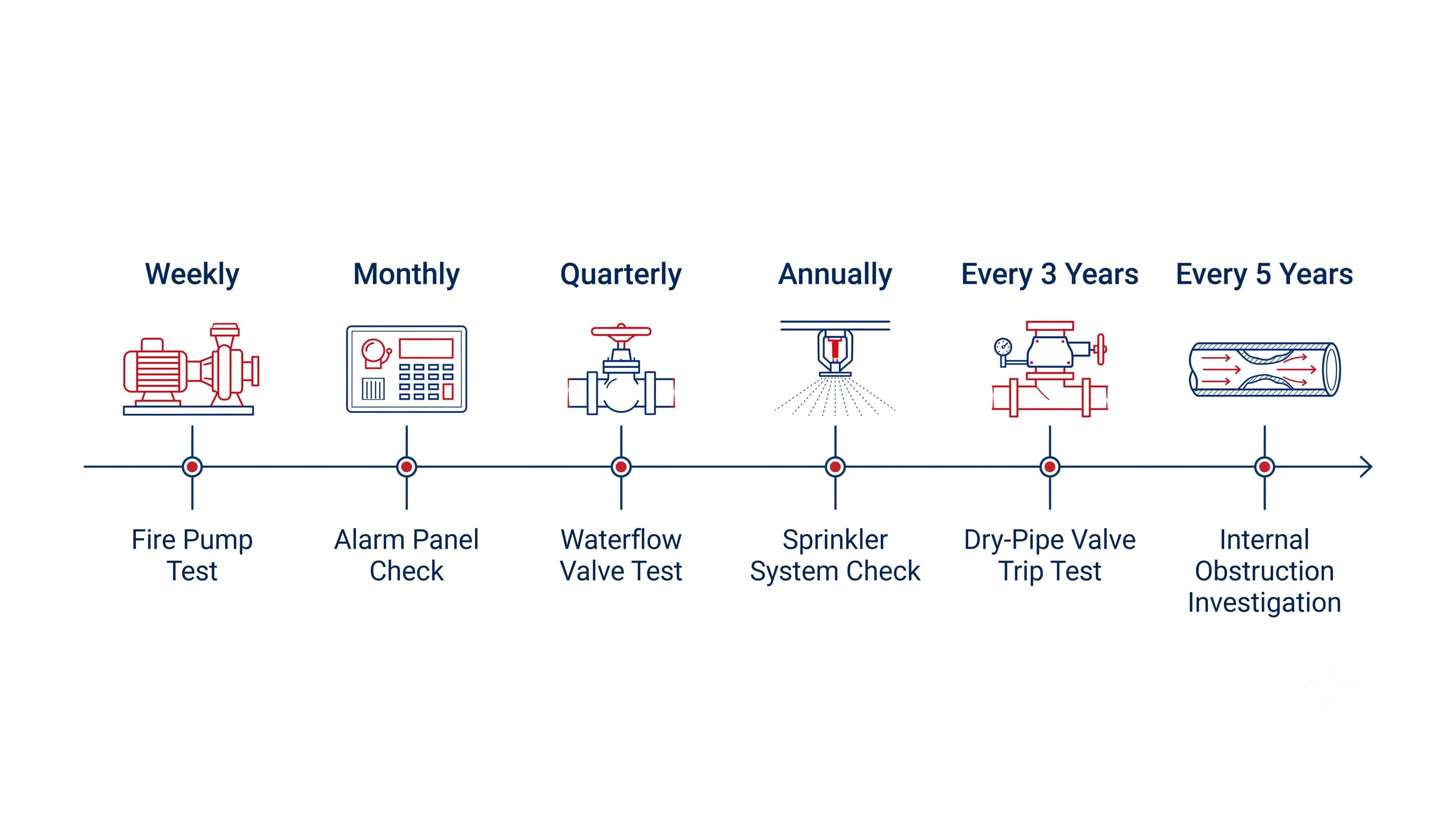
Fire protection system inspection isn't one visit on one schedule - it's a layered set of checks running at different frequencies for different components, from weekly visual checks to five-year internal pipe assessments. NFPA 25 defines specific frequencies for each component: weekly fire pump tests, monthly alarm device inspections, quarterly valve inspections, annual flow tests, and five-year internal pipe inspections. Missing any single scheduled item creates a compliance gap, and as one real case shows, that gap can go undetected for a long time even in a facility that looks well-maintained on paper.
The Problem: "We Inspect Our System" Often Means "We Inspect Part of It"
A dangerously common pattern is a facility confidently reporting that their fire protection system is inspected regularly - while only a portion of the actual system is covered by that inspection routine. Consider a real documented case: a 200,000 square foot industrial facility had a fully functional sprinkler system with quarterly inspections documented for the main risers. During a fire marshal inspection, two sectional control valves in the warehouse were found in the closed position. Quarterly valve inspections had been performed on the riser room valves but had never included the sectional valves located in the warehouse ceiling. The result: the fire marshal cited NFPA 25 non-compliance, two sections of the warehouse - approximately 40,000 square feet - had been unprotected for an unknown period, and insurance was notified and required immediate remediation.
The facility wasn't ignoring maintenance. They had a documented inspection program. It simply didn't cover every valve in the system, and NFPA 25 requires inspection of all valves in a system, not just the main risers. This is exactly the kind of gap that "we do inspections" doesn't protect against - scope matters as much as frequency.
The Solution: What NFPA 25 Actually Requires, by Frequency
Weekly
Fire pumps require weekly testing for diesel units and monthly for electric units, and control valve inspection frequency ranges from weekly to quarterly, based on the supervision method - an unsupervised valve needs checking more often than one with electronic supervision monitoring its position continuously.
Monthly
NFPA 72 sets minimum inspection intervals for fire alarm control panels and accessible smoke detectors in occupied buildings, typically on a monthly basis alongside general visual system checks.
Quarterly
Valve inspections not already covered under a weekly schedule, along with functional testing of alarm devices and general system components, generally fall into this window.
Annually
Annual inspections verify that the entire system will perform when it matters most - all sprinklers, hangers, pipes, and fittings should be tested for good working condition, main drain tests confirm control valves are open and working properly, and deluge valves should have a full trip test at least once a year. Because of their complexity, annual fire sprinkler inspections should only be performed by licensed sprinkler contractors, not general facility staff.
Multi-Year
Internal pipe inspections are required every five years to check for corrosion, scale buildup, or obstructions, hydrostatic testing for standpipes and pressure-regulating devices must be conducted every five years, and backflow preventers should be tested every five years. Dry-pipe valves require an annual partial trip test plus a full-flow trip test every three years - not an annual full trip, which is a common point of confusion.
Fire Protection System Inspection Frequency Summary Table
|
Frequency |
What Gets Checked |
|
Weekly |
Diesel fire pumps, unsupervised control valves |
|
Monthly |
Electric fire pumps, fire alarm panels, accessible detectors |
|
Quarterly |
Supervised valves, alarm device functional tests |
|
Annually |
Full sprinkler/hanger/pipe check, main drain test, deluge full trip test |
|
Every 3 Years |
Dry-pipe valve full-flow trip test |
|
Every 5 Years |
Internal pipe inspection, standpipe hydrostatic test, backflow preventer test |
What Systems Fall Under This
NFPA 25 covers the ongoing operational care of every water-based fire suppression component in a building - sprinkler systems, standpipes, fire pumps, water-storage tanks, water-spray and foam-water systems, water mist systems, private fire service mains, and private fire hydrants. This is a genuinely broad scope, which is exactly why a facility's inspection program needs to be built against the full system inventory, not just the most visible or accessible components.
Why Comprehensive Coverage Matters More Than Frequency Alone
The case above illustrates something worth internalizing: a facility with a well-documented, regularly executed inspection program can still have a serious compliance and safety gap if the inspection scope itself is incomplete. Missing any scheduled item - or missing an entire category of components from the schedule altogether - creates a compliance gap that fire marshals and insurance auditors will identify, often at the worst possible moment: during an actual audit or, in the worst case, during an actual fire.
Who Should Perform Fire Protection System Inspection
Routine inspections can be performed by qualified facility staff for basic visual checks, but annual and more technical inspections should be performed only by licensed sprinkler contractors given their complexity. A realistic program usually combines both - internal staff handling frequent, simple visual checks, with a qualified contractor handling the more technical annual and multi-year testing.
Why Facilities in Hosur Choose Technique Engineers for System Inspection
Technique Engineers provides fire protection system inspection covering the full component inventory - hydrant, sprinkler, alarm, suppression, and pump systems - for facilities across Hosur and Krishnagiri, building inspection schedules against the complete system rather than just the most visible or accessible parts. This is the same coverage-first approach we've emphasized throughout this series, including in our guide to Fire Protection System AMC, where we cover how ongoing maintenance and inspection work together.
Frequently Asked Questions
How do we know if our current fire protection system inspection actually covers our entire setup?
The honest way to check is to compare your inspection checklist against a full inventory of every valve, device, and component in your fire protection system - not just the main risers or the most accessible points. The case discussed above shows exactly how a documented, regularly executed program can still miss an entire category of components if the scope wasn't built comprehensively from the start.
Can our own staff handle all of these inspections, or do we need a contractor?
A mix is typical and appropriate - basic visual checks (valve positions, gauge readings, general condition) can usually be handled by trained facility staff on a frequent basis, while annual and multi-year technical testing genuinely needs a licensed contractor given the complexity and the equipment involved.
What happens if an inspection finds a deficiency?
It needs to be corrected within a timeframe the local authority having jurisdiction finds acceptable, with a re-inspection record generated afterward. This isn't optional or something to defer to the next scheduled cycle - a known deficiency left uncorrected is a much clearer compliance and safety problem than one that simply hasn't been discovered yet.
Is a five-year internal pipe inspection really necessary if the system seems to be working fine?
Yes - corrosion, scale buildup, and obstructions inside pipes generally aren't visible or detectable from outside the system, and they can reduce effective water flow without any obvious external symptom. A system that "seems fine" day-to-day can still have accumulated internal degradation that only a proper internal inspection would catch.
Do automated or remote inspection systems replace the need for physical inspections?
Not entirely - automated tools can meet the intent of some visual inspection and testing requirements, but there are still specific conditions attached, such as periodic physical observation of discharge for certain test types. It's generally a cost-benefit decision for higher-frequency, lower-complexity checks rather than a full replacement for all inspection activity.
Technique Engineers provides fire protection system inspection, testing, and maintenance for industrial and commercial facilities across Hosur and Krishnagiri, covering the complete system rather than isolated components. Contact us to review your current inspection program's coverage.


