
How Fire Protection Systems Work During Emergencies (Real Scenarios)
See how fire detection, sprinklers & FM200 suppression respond in real Tamil Nadu emergencies. Learn what keeps factories, hospitals & IT parks safe.
India records over 1.2 lakh fire accidents every year. Tamil Nadu ranks among the top five states for industrial fire incidents, with losses exceeding ₹1,500 crore annually. Behind those numbers are factories shut overnight, hospitals evacuated mid-surgery, data centres wiped in minutes, and lives that cannot be recovered.
The difference between a fire that is contained and a fire that destroys an entire facility almost always comes down to one thing: whether a correctly designed, properly installed, and well-maintained fire protection system was in place - and whether it did exactly what it was supposed to do when it mattered.
This blog is not about fire safety theory. It walks through how fire protection systems actually respond during real emergencies - the sequence of events from the first detection signal to full suppression - and what that means for factories, IT parks, hospitals, hotels, and residential complexes across Tamil Nadu. If you are responsible for a building in Chennai, Coimbatore, Madurai, Tiruppur, or anywhere else in the state, this is what you need to understand before your next fire safety audit or Fire NOC renewal.
What Is a Fire Protection System? (Types, Components, and How They Differ)
A fire protection system is not a single device. It is a layered, engineered response that covers detection, alarm, suppression, and evacuation - each layer working in sequence to catch a fire early, alert occupants, control the spread, and help people exit safely.
Active fire protection systems respond directly to a fire event. They require some form of action - automatic or manual - to function. Sprinkler systems, gas suppression systems, fire alarms, and fire pumps all fall under this category.
Passive fire protection works independently of any trigger. It is built into the structure of the building itself - fire-rated walls, fire doors, compartmentalisation, and firestopping around cable and pipe penetrations. Passive protection does not stop a fire, but it limits how fast and how far fire spreads, buying time for active systems and for occupants to evacuate safely.
The four core components of an active fire protection system work in this order:
- Detection - Smoke, heat, or gas sensors identify the early signs of fire
- Alarm - The Fire Alarm Control Panel (FACP) triggers audible and visual alerts across the affected zone
- Suppression - Sprinklers, gas suppression, or foam systems activate to control or extinguish the fire
- Evacuation - Public address systems, emergency lighting, and exit signage guide occupants to safety
The types of suppression systems available include wet pipe and dry pipe sprinklers, clean agent gas systems (FM200, Novec 1230), CO₂ suppression, foam systems, and dry powder systems. Choosing the right combination depends on your occupancy type, the nature of the fire risk, and what assets you are protecting.
A textile warehouse and a server room face completely different fire risks. One-size-fits-all fire protection does not exist. The system must be designed around the actual fire load - the type, quantity, and arrangement of combustible materials and equipment in the building. This is why fire protection in India requires a site-specific engineering approach, not a catalogue-based one.
How Fire Detection Systems Work in a Real Emergency
Detection is the first line of defence. A fire identified in its early stages - before flames take hold - gives the suppression system time to act and gives occupants the time they need to evacuate safely.
Types of detectors and what each one senses:
- Ionisation smoke detectors respond rapidly to fast-flaming fires that produce small combustion particles - common in textile mills, paper warehouses, and dry goods storage
- Photoelectric smoke detectors detect slow, smouldering fires that produce dense visible smoke - better suited to sleeping areas, hotels, and healthcare facilities
- Heat detectors activate at a set temperature threshold (typically 57°C or 68°C) and are used in kitchens, boiler rooms, and environments where smoke detectors would produce false alarms
- Flame detectors identify the infrared or ultraviolet signature of an open flame - used in chemical plants, fuel storage areas, and vehicle maintenance areas
- Gas detectors sense the presence of combustible or toxic gases before a fire even starts - critical in pharmaceutical manufacturing units and LPG storage zones
How the FACP ties it all together:
Detectors are wired into zones. Each zone covers a defined area of the building. When a detector triggers, the Fire Alarm Control Panel identifies which zone is affected, displays the location, and activates the appropriate alarms and suppression response for that zone - while leaving uninvolved zones unaffected.
A properly mapped zoning system means the response is targeted. It prevents the unnecessary evacuation of an entire building when a fire is contained to one floor or one room.
Signal-to-response timeline in a live event:
In a well-designed system, the timeline runs like this: detector senses smoke → signal reaches the FACP in under two seconds → alarm activates within five seconds → suppression system begins pressurisation → discharge occurs within 10–30 seconds depending on system type.
Real scenario - early smoke detection at a Coimbatore textile factory:
A spinning mill in Coimbatore ran three shifts continuously. At 2:14 AM, a photoelectric smoke detector in the cotton bale storage area picked up a slow-building smoulder from an overheated motor - before any visible smoke appeared. The FACP immediately flagged Zone 7, activated site alarms, and triggered the sprinkler system in that zone. Shift workers evacuated the area in under four minutes. The fire was contained to a 12-square-metre area. Without early smoke detection, the cotton bale inventory - and likely the entire warehouse - would have been gone by morning.
How Fire Suppression Systems Activate During an Emergency
Once detection sends the signal, suppression takes over. Different systems activate in different ways, but the principle is the same: get the right suppression agent to the right location before the fire grows beyond control.
Sprinkler system mechanics:
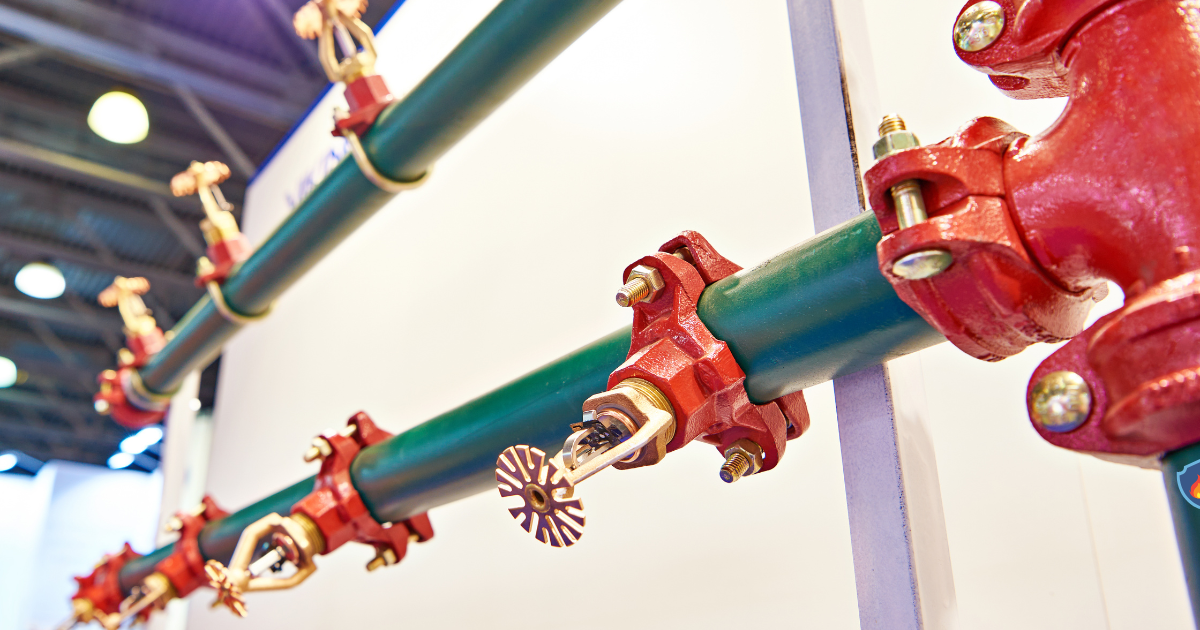
Wet pipe sprinkler systems maintain water at pressure throughout the pipework at all times. Individual sprinkler heads are held closed by a glass bulb filled with glycerine-based fluid. When ambient temperature at that specific head reaches 68°C, the bulb shatters - and only that head opens. Water flows immediately.
This is important: sprinklers are heat-activated locally, not smoke-activated globally. A single head activates where the heat is concentrated, not across the entire building. The common image of every sprinkler going off at once reflects movies, not engineering.
Clean agent gas suppression - FM200 and Novec 1230:
These systems are designed for spaces where water would cause more damage than the fire itself - data centres, server rooms, archive rooms, and medical equipment rooms. FM200 (HFC-227ea) and Novec 1230 disrupt the chemical chain reaction of combustion and absorb heat rapidly. They discharge in under 10 seconds, suppress the fire, and leave no residue. Equipment is unharmed. Operations can resume quickly.
Both agents are non-conductive, safe for use around energised electrical equipment, and environmentally compliant under current Indian and international standards.
Foam suppression for petroleum and chemical facilities:
For sites handling flammable liquids - oil storage, chemical warehouses, paint factories, and PESO-regulated facilities - foam suppression systems create a blanket over the fuel surface, cutting off oxygen and preventing re-ignition. These systems are mandatory for many industrial facilities under PESO regulations and the Petroleum Rules.
Dry powder systems for electrical fires and welding areas:
Dry powder - typically monoammonium phosphate or potassium bicarbonate - is effective on Class B (flammable liquids), Class C (flammable gases), and Class E (electrical) fires. Common applications include welding bays, electrical switchrooms, and generator enclosures where neither water nor gas suppression is appropriate.
Real scenario - FM200 saves a Chennai IT park server room:
A fault in a UPS unit in a Tier II data centre in Chennai's Perungudi IT corridor triggered a rapid temperature rise at 11:40 PM. The FM200 system, linked to the room's VESDA (Very Early Smoke Detection Apparatus) installation, discharged within 8 seconds of the alarm. The fire was suppressed before it spread to adjacent racks. All servers remained operational. There was no data loss, no water damage, and the room was cleared and back online by 1:15 AM.
Passive Fire Protection: The Silent Layer You Never See
Sprinklers and gas suppression systems get the attention. Passive fire protection is the layer that gives everything else time to work.
Fire-rated walls, floors, and doors:
The National Building Code (NBC) 2016 specifies fire resistance ratings for structural elements by occupancy type. A 60-minute fire-rated wall will contain fire and prevent structural failure for at least 60 minutes under standard fire test conditions. A 120-minute rating applies to higher-risk zones - stairwells, plant rooms, and compartment boundaries in large industrial buildings.
Fire-rated doors must self-close and self-latch. A fire door propped open with a wedge is not passive protection - it is a gap in your fire compartment that smoke and flame will find in under a minute.
Fire dampers and smoke control in HVAC:
HVAC ducts are one of the fastest paths for smoke to travel through a building. Fire dampers are installed in ductwork at fire compartment boundaries. When a fire activates a fusible link or electrical signal, the damper closes and prevents smoke migration. Smoke control systems - extraction fans or pressurisation systems - work in parallel to keep stairwells and escape routes clear of smoke.
Compartmentalisation:
Buildings are divided into fire compartments - bounded areas designed to contain a fire within a defined space for a rated period. In a properly compartmentalised building, a fire in one section does not reach the adjacent section for a minimum rated duration. This buys evacuation time, limits asset loss, and reduces structural damage.
Intumescent seals and firestopping:
Every cable tray, pipe, or conduit that passes through a fire-rated wall creates an opening. Without firestopping, smoke and flame move freely through these gaps within minutes. Intumescent materials expand under heat to seal penetrations and maintain the compartment fire rating. Under NBC 2016, firestopping is mandatory at all fire compartment penetrations - but it is among the most commonly overlooked elements during construction.
Types of Fire Protection Systems - Comparison Table
|
System Type |
Best For |
Approx. Cost (INR) |
Activation Trigger |
Equipment Damage Risk |
Compliance Standard |
|
Wet Pipe Sprinkler |
Commercial offices, factories, warehouses |
₹55–90/sq. ft |
Heat at 68°C (head-level) |
Moderate - water discharge |
NBC 2016, IS 15105 |
|
Dry Pipe Sprinkler |
Cold storage, unheated warehouses |
₹80–125/sq. ft |
Heat at 68°C (head-level) |
Moderate 0 water discharge |
NBC 2016, IS 15105 |
|
FM200 / Novec 1230 |
Server rooms, data centres, archives |
₹1,800–4,500/m³ |
Smoke or heat via FACP |
Nil - clean agent, no residue |
NFPA 2001, IS 15493 |
|
CO₂ Suppression |
Electrical rooms, printing presses |
₹1,200–3,000/m³ |
Smoke or heat via FACP |
Nil - but hazardous to occupants |
IS 6382 |
|
Foam Suppression |
Petroleum, chemical, aviation fuel |
₹100–200/sq. ft |
Automatic or manual |
Nil - foam blanket only |
PESO, IS 15683 |
|
Dry Powder |
Electrical panels, welding bays, LPG zones |
₹60–100/sq. ft |
Manual or automatic |
Low |
IS 4308 |
Costs are indicative and vary based on building size, system complexity, pipe routing, and local material rates. An engineering site assessment is required for accurate project estimates.
Choosing the right system by occupancy type:
For commercial office buildings and IT campuses, wet pipe sprinklers cover the general floor area while FM200 or Novec 1230 protects server rooms and UPS rooms. For textile mills and garment factories, wet pipe sprinklers with early-warning VESDA detection form the backbone of the system. For hospitals, the standard mix is clean agent suppression in equipment rooms, wet pipe in wards and corridors, and smoke control in HVAC - aligned with NBC Group C occupancy requirements.
For petroleum storage and chemical manufacturing facilities, PESO regulations are the governing framework. Foam suppression is typically mandated for flammable liquid storage, with CO₂ or dry powder for associated electrical and mechanical areas.
Real Emergency Scenarios: How Fire Protection Systems Responded
This is the core of what fire protection engineering is designed to deliver. The following scenarios reflect real fire event types across Tamil Nadu's industrial and commercial sectors - and what a correctly installed, maintained system achieves in each case.
Scenario 1 - Textile factory fire, Tiruppur
What happened: An electrical fault in a loom room ignited synthetic yarn at 3:20 AM. The first indication was airborne lint from a smouldering motor - not yet visible smoke to the naked eye.
How the system responded: A VESDA system in the loom room detected particulate matter within 90 seconds. The FACP triggered zone alarms, alerting the night shift supervisor. The wet pipe sprinkler system activated two heads directly above the ignition point within 40 seconds of the alarm.
Outcome: Fire contained to a 15-square-metre area. Three looms damaged. The rest of the factory - including over ₹4 crore of yarn inventory in adjacent bays - was undamaged. The factory was back in operation by the afternoon shift.
Scenario 2 - Hospital equipment room, Chennai
What happened: A short circuit in an MRI machine cooling unit caused a contained electrical fire during a routine overnight scan at a private hospital in Chennai.
How the system responded: A heat detector in the equipment room activated, triggering the FM200 suppression system. The clean agent discharged and suppressed the fire in under 12 seconds. No water entered the room at any point.
Outcome: The MRI machine sustained minor component damage - not total loss. Water suppression would have destroyed the machine and flooded adjacent areas. The hospital resumed full operations by 8 AM.
Scenario 3 - IT park data centre, Chennai
What happened: A UPS battery cell failure created localised overheating in a server rack at a data centre facility in Chennai's OMR corridor, detected at 2:07 AM.
How the system responded: The VESDA system registered smoke particles at sub-threshold PPM levels - well below what a standard point detector would catch. The FM200 system discharged within 9 seconds. The room's precision air conditioning maintained environmental conditions throughout.
Outcome: Zero data loss. Zero server downtime beyond a brief 4-minute controlled pause. Business continuity plan was not triggered. Without the suppression system, the UPS failure would likely have cascaded into a rack fire within 15 minutes.
Scenario 4 - Shopping mall, Coimbatore
What happened: A fire broke out in a food court kitchen exhaust duct on a Saturday afternoon with approximately 1,400 shoppers on site.
How the system responded: The fire alarm triggered floor-specific audio evacuation in the food court zone. Fire dampers in the HVAC system closed within 3 seconds, preventing smoke from migrating to retail areas. The wet pipe sprinkler system activated in the exhaust chase. Public address announcements guided zone-by-zone evacuation.
Outcome: All 1,400 occupants evacuated in 9 minutes. Fire contained to the exhaust duct. No injuries. Mall reopened the following day after TNFRS inspection and clearance.
Fire Safety Regulations in Tamil Nadu: What Every Building Must Comply With
Non-compliance is not just a financial risk. Under Tamil Nadu law, it is a personal liability - one that can result in building closure, criminal prosecution, and in the event of a fire-related fatality, charges under IPC Section 304A for causing death by negligence.
National Building Code (NBC) 2016:
The NBC classifies buildings into Groups A through G by occupancy type. Each group carries specific fire protection requirements covering suppression systems, detection systems, fire exits, compartmentalisation, and emergency lighting. Group A (residential), Group B (educational), Group C (institutional - hospitals, care homes), Group D (assembly - malls, theatres, marriage halls), Group E (business - offices), Group F (mercantile - retail), and Group G (industrial) each have different mandatory system requirements based on floor area and building height.
Tamil Nadu Fire and Rescue Services (TNFRS):
The TNFRS is the local enforcement authority for fire safety. They conduct building inspections, approve fire protection system drawings, carry out fire safety audits, and issue No Objection Certificates. All buildings above specified height or occupancy thresholds must obtain TNFRS approval before construction and re-inspection on completion.
Fire NOC - who needs it and how to apply:
A Fire NOC is mandatory for all buildings above 15 metres in height, assembly occupancies above ground floor level, hospitals, educational institutions, industrial facilities above specified floor areas, and hotels. The application requires architectural drawings, fire protection system layout drawings, hydraulic calculations, equipment specifications, and a declaration from a certified fire protection consultant. Typical TNFRS processing time runs 30–60 working days for standard applications.
Factories Act compliance:
Industrial units employing more than 10 workers in Tamil Nadu must comply with Factories Act fire safety provisions - maintained fire exits, fire extinguishers at prescribed intervals, trained fire safety officers, and documented emergency procedures. Compliance is verified by the Inspector of Factories.
PESO approval:
Any facility storing petroleum products above threshold quantities requires PESO (Petroleum and Explosives Safety Organisation) approval for the storage installation, which includes foam suppression, earthing and bonding systems, and tank spacing. Operating without PESO approval is a criminal offence under the Petroleum Act 1934.
Consequences of non-compliance:
TNFRS can issue building sealing orders for Fire NOC violations, with reopening only permitted after compliance and re-inspection. Insurance claims are typically voided where non-compliance is established at the time of a fire event. Building owners and designated responsible persons face personal liability for fire-related fatalities in non-compliant buildings.
If your Fire NOC is expired, your maintenance records are incomplete, or your system has not been inspected in over 12 months, those are not administrative gaps - they are legal exposures.
How Technique Engineers Designs and Installs Fire Protection Systems in Tamil Nadu
With 17 years of fire protection experience across Tamil Nadu's industrial, commercial, and institutional sectors, Technique Engineers follows an engineering-first process — not a catalogue-based one.
Site risk assessment:
Every project begins with a site visit. Our engineers assess the building's occupancy type, fire load, structural characteristics, access constraints, and nearest hydrant supply. This assessment forms the foundation of the system design.
Custom system design:
We prepare full engineering drawings, hydraulic calculations for sprinkler systems, zone layouts for detection systems, suppression agent calculations, and a complete Bill of Quantities. All drawings are produced for TNFRS submission and comply with NBC 2016 and the relevant IS standards.
Fire NOC assistance:
We support clients through the TNFRS approval process — drawing submission, clarification responses, and inspection preparation. Seventeen years of working with TNFRS has given our team a detailed understanding of local documentation requirements and common revision points.
Installation:
Procurement is from verified suppliers of IS-certified equipment. Installation is carried out by certified technicians under full engineering supervision. Typical installation timelines range from 4 weeks for single-floor commercial spaces to 16 weeks for large industrial complexes with multiple system types.
Testing, commissioning, and certification:
All systems undergo pressure testing, functional alarm testing, and suppression flow tests before handover. We produce commissioning records and as-built documentation for client records and future TNFRS inspections.
Annual Maintenance Contracts (AMC):
Our AMC programmes cover scheduled quarterly inspections, annual pressure tests, detector sensitivity checks, battery replacements, hose reel servicing, and NOC renewal support. A well-maintained system is a compliant system - and the only kind that works when it needs to.
Industries we serve across Tamil Nadu: textile mills and garment export units, IT and tech campuses, private hospitals and diagnostic centres, hotels and hospitality groups, pharmaceutical manufacturing units, steel and engineering factories, residential towers, and shopping complexes.
How Much Does a Fire Protection System Cost in India?
The cost of a fire protection system varies significantly by building type, system selected, floor area, and risk profile. Here is what drives the number.
Key cost factors:
- Building size - Total floor area determines pipe length, number of heads, pump sizing, and agent quantity
- Occupancy type and risk category - A chemical storage facility costs considerably more to protect than an office floor of the same area
- System selected - FM200 for a server room costs more per protected volume than a wet pipe sprinkler for a warehouse. The comparison table earlier in this post provides a system-by-system benchmark
- Site-specific conditions - Ceiling height, structural obstructions, water supply pressure, and pump room location all influence the final cost
Approximate installation costs:
For commercial buildings, wet pipe sprinkler systems typically run ₹55–90 per square foot for standard occupancies. FM200 and Novec 1230 clean agent systems for server rooms range from ₹1,800–4,500 per cubic metre of protected volume, depending on agent concentration required. Foam suppression for petroleum facilities runs ₹100–200 per square foot of protected area.
These are starting benchmarks. An engineering site assessment is required for an accurate project estimate.
Annual Maintenance Contract costs:
AMC pricing generally runs at 3–5% of the total installation cost per year, depending on system complexity and inspection frequency. For a ₹15 lakh installation, expect annual AMC costs in the ₹45,000–75,000 range, covering quarterly inspections and all routine maintenance.
Insurance premium reduction:
A certified, maintained fire protection system is recognised by most general insurance providers in India as a measurable reduction in property risk. Premium reductions of 15–30% on the fire and allied perils section of a property policy are commonly achieved for buildings with documented, certified systems. For many buildings, the insurance saving alone recovers the AMC cost within the first year.
Hidden costs to avoid:
Non-IS-marked or uncertified equipment creates compliance failures at TNFRS inspection and voids insurance claims. False alarm fines apply under Tamil Nadu regulations where poorly maintained systems produce repeated nuisance activations. Incomplete maintenance records - missing quarterly or annual service logs - can invalidate the Fire NOC at renewal, triggering a re-inspection and potential building closure while outstanding works are rectified.
Fire Protection Systems in Chennai, Coimbatore, Madurai, Salem, and Trichy
Fire risk profiles differ significantly across Tamil Nadu's major cities. The system that fits a Chennai IT corridor facility is not the same system that a Coimbatore spinning mill or a Trichy pharmaceutical plant requires.
Chennai
Chennai's fire protection landscape spans IT corridors along OMR and Perungudi, high-rise residential towers in Nungambakkam and Adyar, large private hospitals in Kilpauk and Anna Nagar, and port and logistics facilities in Ennore and Kattupalli. IT campuses typically require FM200 or Novec 1230 for server and UPS rooms, with wet pipe sprinklers for common areas and workspaces. High-rise buildings above 45 metres require wet riser systems, pressurised stairwells, and refuge areas under NBC Group A and E requirements. Use semantic keyword here: fire protection company Chennai.
Coimbatore
Coimbatore is Tamil Nadu's largest industrial city - home to textile mills, spinning units, engineering component factories, pump manufacturers, and large cold storage facilities. The dominant fire risk is fast-spreading textile and synthetic fibre fires in large open floor areas. VESDA early detection, wet pipe sprinklers with fast-response heads, and foam suppression for associated chemical storage form the typical system configuration. Cold storage facilities require dry pipe sprinkler systems to prevent pipework freezing in low-temperature zones.
Madurai
Madurai's fire protection requirements span large commercial complexes and shopping malls in the city centre, hotels and lodges near the Meenakshi Amman Temple precinct, educational institutions, and industrial units on the city outskirts. Assembly occupancies - malls, marriage halls, auditoriums - require integrated alarm, suppression, and smoke control under NBC Group D requirements. Older commercial and heritage structures present specific challenges around pipe routing and structural penetrations.
Salem
Salem's profile is dominated by steel rolling mills, power looms, and a growing commercial real estate base. Steel facilities carry high fire loads from lubricants, cutting oils, and electrical transformer bays - requiring foam suppression in oil-handling areas and CO₂ or dry powder systems in electrical substations. Commercial and hospitality buildings in Salem's expanding retail sector follow standard NBC Group E and F requirements for wet pipe sprinklers and addressable fire alarm systems.
Trichy
Trichy houses a significant pharmaceutical manufacturing base, large government institutional buildings, heritage structures, and industrial zones including BHEL's manufacturing complex. Pharmaceutical units require clean room-compatible suppression - typically pre-action sprinkler systems or FM200 - combined with gas detection for solvent storage areas. Heritage structures require careful system integration that does not compromise building fabric or original materials. Government buildings must comply with CPWD fire safety standards in addition to the NBC.
How to Install a Fire Protection System: Step-by-Step Process
This is the complete process from the first site conversation to a commissioned, certified system - applicable to any commercial, industrial, or institutional building in Tamil Nadu.
Step 1 - Fire risk assessment
A qualified fire protection engineer visits the site to evaluate hazard categories, fire loads, occupancy type, structural constraints, existing water supply, and access routes. This assessment determines which system types are appropriate and defines what the system must achieve.
Step 2 - System design
Engineering drawings are prepared covering pipe layout, sprinkler head or detector placement, zone mapping, pump specifications, and suppression agent calculations. Hydraulic calculations confirm that water pressure and flow rates at the most hydraulically remote sprinkler head meet design parameters under IS 15105. A complete BOQ is produced for procurement.
Step 3 - Fire NOC application
Drawings and specifications are submitted to TNFRS, or the local municipal authority depending on building classification. The Fire NOC is required before the system can be certified. Fire protection installation typically proceeds concurrently with construction, but final certification requires NOC approval at completion.
Step 4 - Procurement and installation
IS-certified equipment is procured from approved suppliers. Pipework, sprinkler heads, detectors, control panels, suppression agent containers, and pumping sets are installed by certified technicians under engineering supervision. Progress inspections are documented throughout installation.
Step 5 - Testing and commissioning
All systems are tested before handover. Sprinkler systems undergo hydrostatic pressure tests at 1.5 times working pressure, held for a minimum of two hours. Alarm systems undergo full functional tests - detector activation, zone mapping accuracy, FACP response, and alarm sound level verification. Gas suppression systems undergo discharge tests or agent weight and cylinder pressure checks.
Step 6 - Handover and training
As-built drawings, commissioning records, equipment warranties, and third-party test certificates are handed over to the client. Facility managers and security staff receive operational training - how to use manual call points, what to do when an alarm activates, how to silence and reset the FACP after an event. A mock evacuation drill is conducted and documented.
Step 7 - Annual maintenance
AMC begins at handover. Quarterly inspections, annual pressure tests, detector sensitivity checks, battery replacements, hose reel servicing, and fire pump run tests are carried out on schedule and fully documented. Records are maintained for production at TNFRS inspection during NOC renewal.
Want us to walk you through this process for your building?
[Get a free site assessment from Technique Engineers →]
FAQs About Fire Protection Systems in India
- What is the difference between a fire protection system and a fire extinguisher?
A fire extinguisher is a portable, manually operated device for first-response use on small, contained fires. A fire protection system is a fixed, engineered installation - sprinklers, gas suppression, detection panels, alarms - designed to detect and suppress fires automatically before they grow beyond control. An extinguisher depends on a trained person being present and responding correctly within seconds. A fire protection system responds whether anyone is in the building or not.
- Is a fire protection system mandatory for all buildings in Tamil Nadu?
Not for every building - but for most non-residential and larger residential buildings, yes. The National Building Code 2016 and TNFRS regulations require fire protection systems for buildings above 15 metres in height, hospitals, educational institutions, assembly occupancies such as malls and theatres, hotels, and industrial facilities above specified floor areas. A fire protection consultant can confirm your specific compliance requirements based on your occupancy group and building dimensions.
- How does a sprinkler system know when to activate?
Each sprinkler head contains a glass bulb filled with glycerine-based fluid that holds the head closed. When ambient temperature at that specific head reaches the rated threshold - typically 68°C for standard heads - the bulb shatters and the head open, releasing water immediately. Only the heads exposed to sufficient heat activate. The system does not respond to smoke, manual alarms, or temperature rises in other parts of the building.
- Which fire suppression system is best for server rooms and data centres in India?
FM200 (HFC-227ea) and Novec 1230 are the two leading options for server rooms and data centres. Both suppress fires without water, leave no residue, are non-conductive, and are safe for use around energised electrical equipment. Novec 1230 has a significantly lower global warming potential and is increasingly preferred for new installations. CO₂ suppression is effective but requires full room evacuation before discharge, making it unsuitable for occupied or partially occupied data facilities.
- How often should fire protection systems be inspected and serviced?
Under IS 15105 and standard TNFRS NOC conditions, fire protection systems should receive quarterly inspections - covering visual checks, alarm function testing, and hose reel checks - plus a comprehensive annual service covering hydrostatic pressure tests, detector sensitivity calibration, agent weight verification for gas systems, and battery replacement. All service records must be maintained and produced at NOC renewal.
- Can a certified fire protection system reduce building insurance premiums in India?
Yes. Most general insurance providers in India apply a material risk discount for buildings with certified, maintained fire protection systems. The reduction typically ranges from 15–30% on the fire and allied perils section of a property policy. Insurers require a copy of the Fire NOC, the commissioning certificate, and current AMC records to apply the discount. The savings frequently recover AMC costs within the first or second year of the system's life.
- What happens if a building in Tamil Nadu does not have a valid Fire NOC?
Operating a commercial or industrial building without a valid Fire NOC exposes the owner and occupier to building sealing orders from TNFRS, which require full compliance and re-inspection before reopening. Insurance claims are typically rejected where non-compliance is established at the time of a fire. In the event of a fire-related fatality in a non-compliant building, the building owner, occupier, and designated responsible persons can face criminal prosecution under IPC Section 304A.
- How long does it take to install a fire protection system in a commercial building?
The timeline depends on building size and system complexity. For a single-floor commercial space of 3,000–5,000 sq. ft, a wet pipe sprinkler installation typically takes 3–5 weeks from drawing approval to commissioning. A multi-floor office building of 30,000 sq. ft typically runs 10–14 weeks. A large industrial complex with multiple system types - sprinklers, gas suppression, foam, and detection - can run 20–28 weeks. The Fire NOC application is submitted in parallel and does not add to the installation timeline if initiated early in the project.
- What is the difference between a wet pipe and a dry pipe sprinkler system?
A wet pipe system maintains pressurised water in the pipes at all times. When a sprinkler head activates, water discharges immediately. A dry pipe system keeps pipes pressurised with compressed air or nitrogen. Water waits behind a dry pipe valve at the pump room. When a head activates, air pressure drops, the valve opens, and water fills the pipes before discharge begins. Dry pipe systems are used wherever pipes are exposed to freezing temperatures - cold storage, unheated warehouses, or outdoor structures.
- Can fire suppression systems cause damage to equipment or documents?
Water-based sprinkler systems can damage equipment, documents, and stored materials - this is a known design consideration, not a system flaw. Suppression system selection accounts for this risk. Clean agent systems (FM200, Novec 1230) are specifically chosen for environments where water damage is unacceptable - server rooms, medical equipment rooms, archive stores. They discharge without water, leave no residue, and are safe for energised electrical equipment. Choosing the right suppression type for each space is a core part of the system design process.
The Right System, Properly Installed, Changes the Outcome
A fire protection system is not a compliance checkbox. It is an engineered, layered response - detection that works in seconds, suppression that activates before a fire gains momentum, and passive protection that contains what the active systems cannot fully stop.
The difference between a contained incident and a catastrophe is almost always traceable to one of three things: the wrong system was installed for the risk, the system was not correctly maintained, or it was not designed for the actual fire load in the building. The scenarios in this post show what happens when all three are done right.
With 17 years of fire protection experience across Tamil Nadu, Technique Engineers has designed, installed, and maintained fire protection systems for factories, IT parks, hospitals, hotels, and residential complexes from Chennai to Coimbatore, Hosur to Trichy.
The right time to assess your fire protection is before the TNFRS inspector arrives - not after.
Get a free fire risk assessment from Technique Engineers - serving Chennai, Coimbatore, Hosur, and Trichy.


