
Fire Sprinkler System: How It Works, Types & Key Benefits
Learn how fire sprinkler systems work, explore the 4 main types (wet, dry, pre-action, deluge), & see the key safety and cost benefits. Get expert guidance today
Have you ever looked up at a small metal part on a ceiling and wondered what it does? That's likely a fire sprinkler head. It's one of the most useful safety tools in any building. It's also one of the most misunderstood.
Movies often show fire sprinklers the wrong way. One spark, and every nozzle in the building goes off at once. That's not how it really works. A good sprinkler system is precise. It reacts to real heat, right where a fire starts. Most of the time, just one sprinkler head is enough to control a fire until help arrives.
This matters a lot for property owners in Tamil Nadu. Think of IT parks in Chennai, textile units in Coimbatore and Tiruppur, or warehouses along the SIPCOT belt in Cuddalore and Sriperumbudur. A fire sprinkler system isn't just a good idea here. In many cases, it's the law. The Tamil Nadu Fire and Rescue Services (TNFRS) often requires one before a building can even get planning approval.
This guide covers four things. How sprinkler systems work. The main types you'll see. What Tamil Nadu's rules require. And why installing one is a smart move for safety, compliance, and your budget.
What Is a Fire Sprinkler System?
A fire sprinkler system is a network of pipes, valves, and heat-sensing sprinkler heads. It connects to a water supply. Its job is to spot a fire and put it out at the source, before it can spread.
A smoke detector only warns people. A sprinkler system actually fights the fire. It often puts out a fire within minutes. That's much faster than a fire truck could reach you, especially in busy areas like Chennai, Madurai, or Coimbatore where traffic can slow things down.
Speed matters here. Without sprinklers, a fire can double in size every 30 to 60 seconds. With sprinklers, one or two heads often stop it before it gets that big.
How Does a Fire Sprinkler System Work?
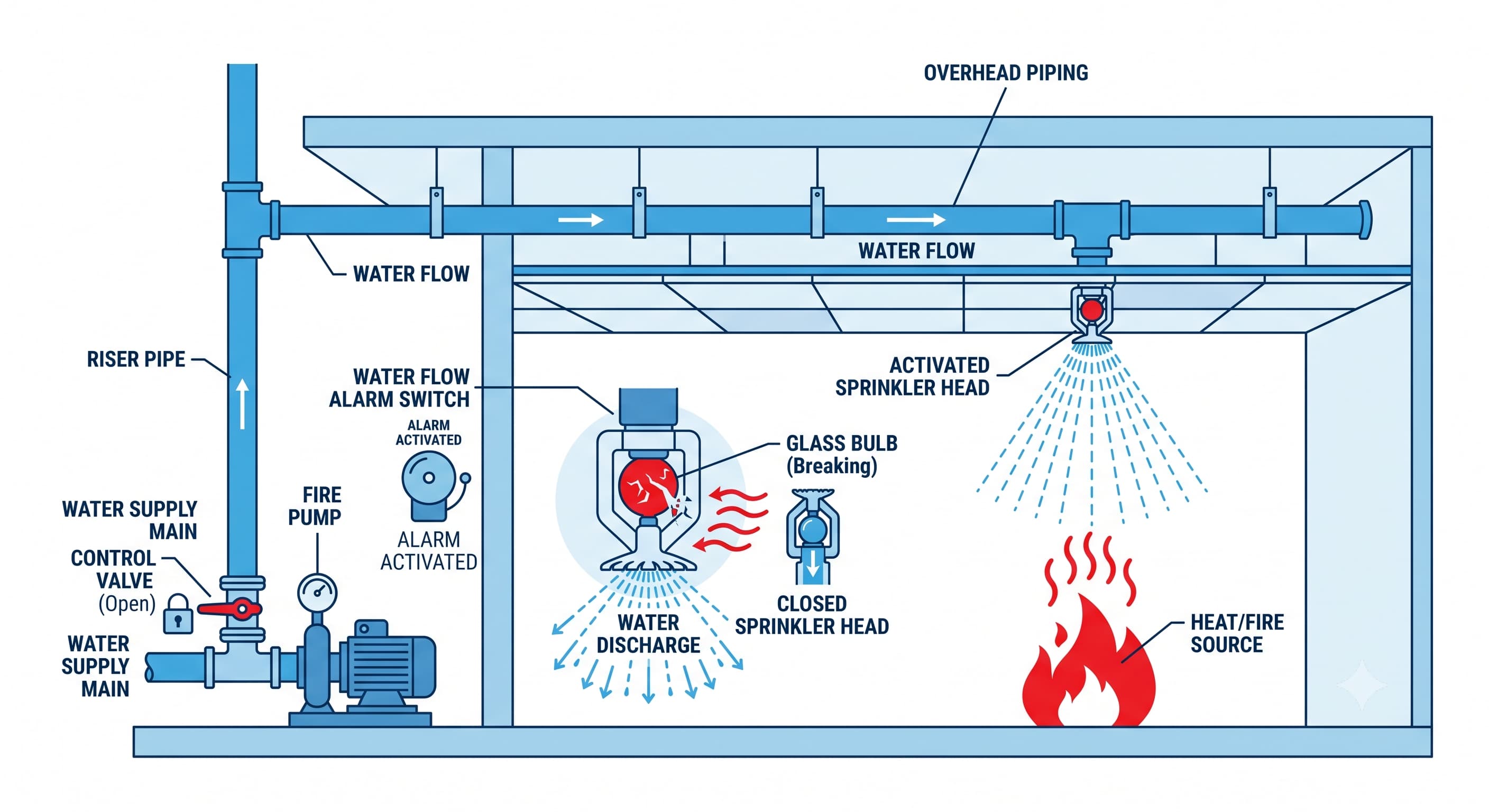
Think of a sprinkler system as a simple chain reaction. It happens in three steps, and no one has to do anything.
Step 1: The Sprinkler Head Senses Heat
Each sprinkler head has a small heat-sensing part. It's usually a glass bulb filled with liquid, or a metal piece called a fusible link. This part is built to react at a set temperature, well above normal room heat.
This matters in Tamil Nadu. Factory floors and warehouses in places like Tiruppur or Madurai can get hot in summer, especially without air conditioning. Sprinkler heads are built to handle that everyday heat. Only real fire heat will trigger them.
When a fire pushes the air past that set temperature, the glass bulb breaks, or the metal link melts. This opens the valve at that one head.
Here's a fact that surprises most people: only the head closest to the fire turns on. The rest of the system stays off. So, the idea that one sprinkler sets off the whole building? That's a myth for most systems.
Step 2: Water Comes Out
Once a head opens, water flows from the pipes straight to that spot. It passes through a small metal disc called a deflector plate. This disc breaks the water into a wide spray. The spray hits the fire and cools the air around it, which slows the fire down while people leave the building.
Step 3: The Full System Works Together
Behind that one sprinkler head, several parts work as a team:
- Pipes – carry water through the building
- Control valves – shut off water to certain sections for repairs
- Risers – tall pipes, usually in a dedicated room, that link the system to the main water supply
- Alarm switches – sense water moving in the pipes and set off the fire alarm
- Fire pumps – electric or diesel pumps that boost water pressure in large buildings. A smaller jockey pump keeps pressure steady so the system doesn't trigger by mistake
TNFRS rules for tall buildings often ask for both an underground tank and a rooftop tank. This makes sure there's enough water even during a power cut, which is still common in parts of the state.
Types of Fire Sprinkler Systems
Not every building has the same fire risk. So not every sprinkler system works the same way. In India, sprinkler design usually follows IS 15105, a national standard, along with the National Building Code. The right type for your building depends on the climate, how the space is used, and what's stored inside.
Wet Pipe Systems
This is the simplest and most common type. It's also the best fit for most buildings in Tamil Nadu. Wet pipe systems keep water in the pipes at all times. So when a head opens, water comes out right away. These systems are easy to maintain, which is why they're used in offices, IT campuses, hospitals, hotels, and homes across Chennai, Coimbatore, and other cities.
Best for: Nearly all buildings in Tamil Nadu, since freezing isn't a concern here
Trade-off: Not good for very cold spaces, which in Tamil Nadu usually just means cold-storage rooms
Dry Pipe Systems
These systems solve the freezing problem. Instead of water, the pipes hold pressurized air. When a head opens, the air escapes first. This drops the pressure, which opens a valve and lets water rush in. In Tamil Nadu, this type is far less common. But it still matters for cold-storage units, food processing plants, and pharma cold-chain facilities that have sub-zero rooms inside an otherwise warm building.
Best for: Cold-storage rooms and refrigerated warehouses
Trade-off: Water takes a bit longer to come out. These systems also need more upkeep, since they have extra valves and air compressors
Pre-Action Systems
These systems add an extra layer of safety against accidental leaks. Like dry pipe systems, the pipes hold air, not water. But water only fills the pipes after a separate detector - usually smoke or heat based - confirms there's a real fire. Only then does a valve open and let water into the pipes, ready for a sprinkler head to release it.
Best for: Data centers and server rooms, common in Chennai's growing IT and GCC hubs. Also good for museums, libraries, and archives, where a water leak could ruin valuable or sensitive items
Trade-off: Costs more to install and maintain, due to the extra detection parts and valves
Deluge Systems
These work the opposite way from pre-action systems. Every sprinkler head stays open all the time. When a fire detector confirms a fire, a main valve opens and water pours out of every head at once, flooding the whole area.
Best for: High-risk industrial sites where fire spreads fast - chemical and petrochemical plants along the Manali and Cuddalore SIPCOT belt, refineries, and places storing flammable liquids or gas
Trade-off: Uses a lot of water and costs more to set up. But it responds fast when the risk is severe
Other Special Systems
A few other systems suit specific needs common in Tamil Nadu's factories and warehouses:
- ESFR (Early Suppression, Fast Response) – Built for large warehouses with tall stacked storage. This is common around Chennai's logistics parks and the Coimbatore-Tiruppur textile belt. ESFR heads release more water, faster, than standard heads. The goal is to put the fire out, not just slow it down.
- In-rack sprinklers – Placed inside storage racks in warehouses holding flammable or tightly packed goods, like textile bales. This gets water to the fire faster.
- Foam and water mist systems – Used at refineries, ports (relevant near Chennai and Thoothukudi), and hazardous storage sites. These mix foam with water, or use a fine mist, to smother fires that plain water can't put out easily.
Fire Sprinkler System Types at a Glance
|
System Type |
How It Works |
Best For (Tamil Nadu) |
Trade-off |
|
Wet Pipe |
Water stays in pipes; comes out instantly |
Offices, IT parks, hospitals, homes |
Rarely an issue in TN's climate |
|
Dry Pipe |
Air holds back water until a head opens |
Cold storage, refrigerated warehouses |
Slight delay before water flows |
|
Pre-Action |
Needs a detector to trigger before water enters pipes |
Data centers, GCCs, archives |
Costs more, more complex |
|
Deluge |
All heads open; water floods the area at once |
Petrochemical plants, SIPCOT hazard zones |
Uses more water, higher cost |
|
ESFR / In-Rack |
Fast, heavy water flow or rack-level setup |
Textile, garment, and logistics warehouses |
Needs special design |
Fire Sprinkler Rules in Tamil Nadu
Fire safety in Tamil Nadu falls under the Tamil Nadu Fire and Rescue Services (TNFRS), guided by the Tamil Nadu Fire Service Act, 1985, and the National Building Code of India. Here's what property owners should know:
- Tall buildings (18.3 metres or higher) need a No Objection Certificate (NOC) from the Director of Fire and Rescue Services. This has to happen before the building plan is approved by the local planning body, such as the Chennai Metropolitan Development Authority (CMDA) in Chennai.
- These tall buildings usually must have a sprinkler system on every floor. They also need a wet-riser system, water tanks (underground and on the roof), fire pumps, and hose reels on each floor.
- Basements bigger than 200 square metres need a sprinkler system too, no matter how tall the building is.
- Most businesses also need a separate Fire Licence. This must be renewed regularly, and it confirms that fire safety gear - extinguishers, alarms, sprinklers - is in place and working.
- Skipping these rules isn't just risky. It can delay project approvals, block occupancy certificates, and lead to fines under the Act.
These rules can get detailed and depend on your building type. It helps to work with a fire safety contractor who knows the TNFRS process well, rather than leaving sprinkler planning for the last stage of construction.
Benefits of Installing a Fire Sprinkler System
The cost of installing a sprinkler system gets a lot of attention. But the long-term value is where it really pays off.
Life Safety. This is the main job of any sprinkler system. It activates within the first minute of a fire, cutting the risk of smoke injury and burns. This gives people more time to get out - critical in Tamil Nadu's crowded garment factories, IT campuses, and tall apartment buildings.
Property Protection. Since sprinklers act fast, they usually stop damage before it spreads through walls and ceilings. That often means a small repair instead of total loss. This matters a lot for costly textile stock, machinery, or server equipment.
Lower Insurance Costs. Many insurers in India offer lower premiums for buildings with a working, certified sprinkler system. Less fire risk means less claims risk for them.
Staying Compliant. The right system keeps your building in line with TNFRS's NOC and Fire Licence rules. This avoids delays, fines, or problems getting planning permission or an occupancy certificate.
Less Downtime. A contained fire means a faster reopening. Instead of months of rebuilding, a sprinkler-protected building is often back in use within days. That's a real advantage for export-focused textile and manufacturing units, where delays can hurt order deadlines.
How to Choose the Right System
There's no single "best" system. The right choice depends on a few things, especially given Tamil Nadu's mix of industries:
- Climate. Since freezing almost never happens here, wet pipe is the practical default. Dry pipe is only needed for cold-storage or refrigerated spaces.
- How the space is used. Offices, IT parks, and homes usually just need wet pipe systems. Data centers, GCCs, and archives are worth the extra cost of pre-action systems.
- Fire risk level. Sites storing flammable liquids or piles of goods - common in SIPCOT zones - need deluge, ESFR, or foam-based systems built for fast, heavy response.
- Legal category. Whether your building falls under TNFRS's tall-building rules, industrial rules, or basement rules will decide what's required, not just optional.
- Budget and upkeep. More advanced systems cost more upfront and need more frequent checks. Weigh that against what you're protecting.
Since these choices tie into TNFRS rules, insurance needs, and risk levels, it's worth having a fire safety expert who knows Tamil Nadu's approval process check your building before you decide.
Common Myths About Fire Sprinklers
A lot of hesitation around sprinklers comes from old or simply wrong ideas. Let's clear a few up:
Myth: Every sprinkler goes off at once.
In most systems, only the head closest to the fire opens. The "all heads at once" idea only applies to deluge systems, which are built that way on purpose for high-risk industrial sites - not for regular wet pipe systems in offices, hotels, or homes.
Myth: Sprinklers cause more damage than the fire.
One sprinkler head releases far less water than a fire tender's hose. Since sprinklers act within the first minute, they usually stop a fire while it's still small. That means less fire damage and less water damage than if the fire had spread until help arrived.
Myth: Cooking smoke, incense, or a cigarette can set one off.
Sprinkler heads react to heat, not smoke. Everyday things like cooking, festival incense, steam, or cigarette smoke almost never reach the heat level needed to trigger a head. That's why false alarms from daily life are very rare.
Frequently Asked Questions
Do all sprinklers turn on at the same time?
No. Except in deluge systems, only the head nearest the fire opens. The rest stay off until heat reaches them directly.
Is a fire sprinkler system required in Tamil Nadu?
For buildings 18.3 metres or taller, a sprinkler system on every floor is usually required as part of the TNFRS NOC process. Basements over 200 square metres also need one, no matter the building's height. Rules can vary by building type, so it's best to check with TNFRS or a fire safety expert.
How much does a fire sprinkler system cost?
Costs vary a lot based on system type, building size, and setup. Wet pipe is usually the cheapest option. Pre-action and deluge systems cost more due to extra parts. A local contractor who knows Tamil Nadu pricing can give you an accurate quote.
How do I get a fire NOC or Fire Licence in Tamil Nadu?
For tall buildings, you apply to the Director of Fire and Rescue Services with your building plans, site layout, and fire safety details, before getting planning permission. For businesses, Fire Licences go through the Divisional Fire Officer at the district level. You can apply at local fire stations or online through Tamil Nadu's e-Sevai portal.
How often should a sprinkler system be checked?
Most systems need a check at least once a year, with more frequent checks for valves, pumps, and alarms. Regular testing makes sure the system works when needed. It's also usually required to keep your Fire Licence valid.
What's the difference between wet pipe and dry pipe systems?
Wet pipe systems keep water in the pipes at all times, so they release water instantly. This works well for most buildings in Tamil Nadu's warm climate. Dry pipe systems use air instead, and only let water in after a head activates. This design stops pipes from freezing, which mainly matters for cold-storage spaces in the state.
Final Thoughts
A fire sprinkler system isn't just a box to tick. It's one of the most reliable ways to protect people and property. In Tamil Nadu, it's often required by law before you can even get a building approved and licensed. Knowing how these systems work, which type fits your building, what TNFRS requires, and what you gain from installing one makes it easier to see this as an investment, not just an expense.
Not sure which system fits your building, or where you stand with TNFRS NOC and Fire Licence rules? A fire safety expert who knows Tamil Nadu's process can check your space, walk you through your options, and make sure everything meets local safety and legal requirements.


