
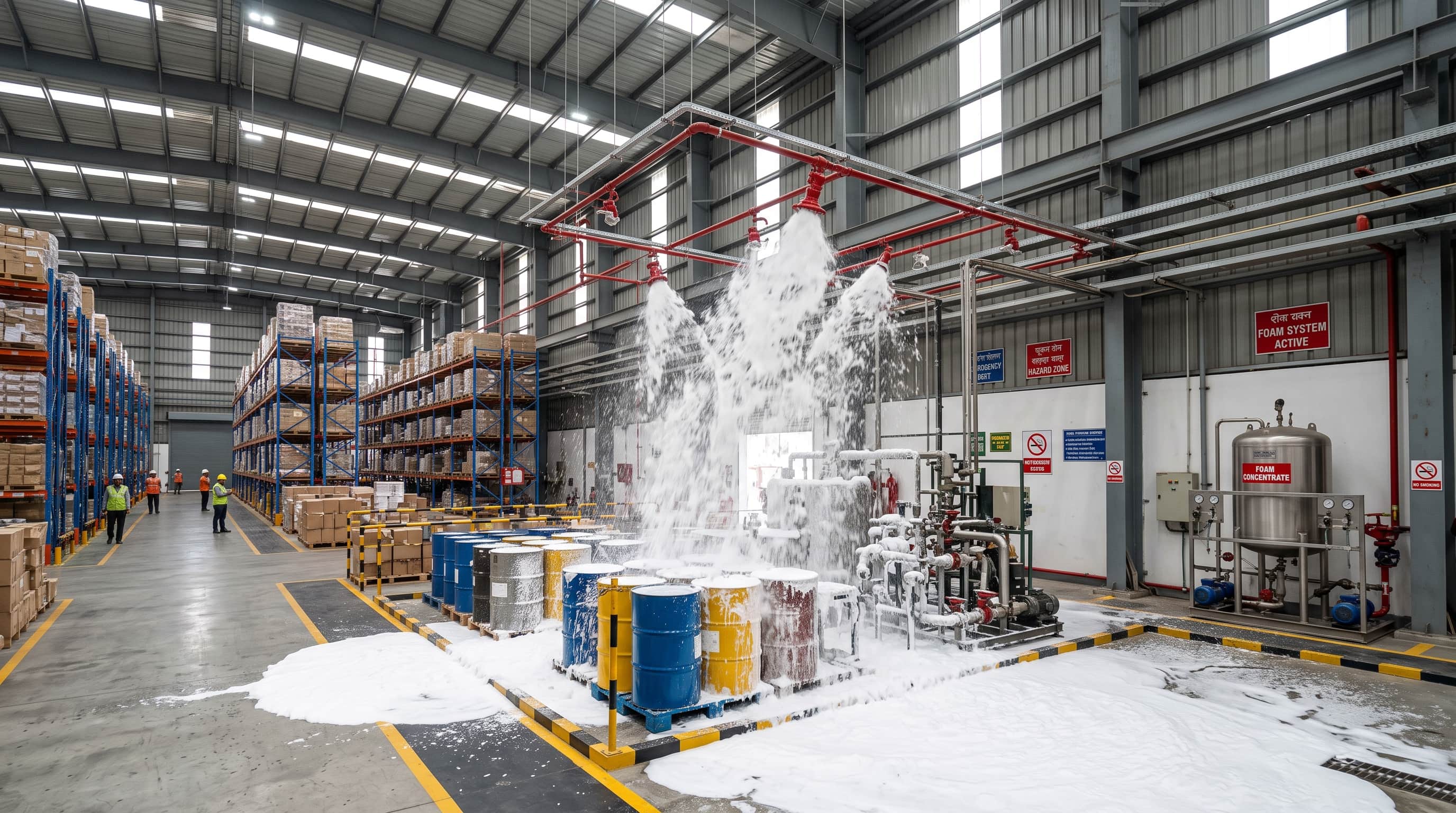
Foam Sprinkler and Suppression System in Hosur: Complete Guide for Industrial Fire Protection
Complete guide to foam sprinkler and suppression systems in Hosur - how they work, NBC/IS standards, costs, and choosing the right fire safety partner.
Looking for a reliable foam sprinkler and suppression system in Hosur? If you run a factory, warehouse, paint shop, or fuel storage facility, plain water sprinklers won't cut it. Water can't put out a burning tank of diesel or thinner - in some cases, it makes things worse by spreading the fire. That's where foam suppression systems come in.
Hosur has grown into one of South India's busiest industrial belts. Automotive plants, electronics units, chemical facilities, and logistics parks now sit close to each other across SIPCOT and the surrounding industrial zones. With that growth comes real fire risk - flammable liquids, paint booths, battery charging areas, and fuel yards are part of daily operations for hundreds of units here.
This guide walks through how foam suppression systems work, which industries need them, the standards they must follow in India, what they cost, and how to pick a contractor who won't cut corners. It's written for plant owners, safety officers, and facility managers who need a clear answer, not a sales pitch.
What Is a Foam Sprinkler and Suppression System?
A foam suppression system mixes water with a foam concentrates and air to create a thick, expanding foam. When this foam is discharged over a fire, it does three things at once:
- Forms a blanket over the burning liquid, cutting off its oxygen supply
- Seals in vapours so the fuel can't keep re-igniting
- Cools the fuel surface, which water alone struggles to do effectively on burning liquids
The foam itself is produced through a proportioner, which draws a small percentage of concentrate (usually 1% to 6%) into the water stream. This mixture then passes through a foam-making device that aerates it before discharge.
Here's how foam suppression stacks up against a standard water sprinkler system:
|
Water Sprinkler |
Foam Suppression |
|
Works well on Class A fires (wood, paper, textiles) |
Built for flammable liquid (Class B) fires |
|
Cools the fire |
Cools the fire and seals vapours |
|
Limited protection where fuel is involved |
Strong, reliable protection against fuel fires |
If your facility stores or handles diesel, paint, thinners, solvents, or lubricants, this distinction isn't academic - it's the difference between a contained incident and a major loss.
Why Industries in Hosur Need Foam Fire Suppression Systems
Hosur isn't a small industrial town anymore. It's home to large automobile manufacturers like TVS Motor Company and Ashok Leyland, along with component suppliers, electronics units, and a growing number of warehousing and logistics parks built around the SIPCOT industrial complexes. Companies like Titan and several Tier-1 and Tier-2 auto component makers also operate out of the region.
This mix of industries brings specific fire hazards:
- Automobile manufacturing – paint shops, hydraulic systems, and battery assembly lines
- Electronics – soldering stations, cleanroom solvents, and dense cabling
- Chemical processing units – bulk storage of reactive or flammable chemicals
- Paint booths – confined spaces filled with flammable vapour
- Warehouses and logistics parks – large volumes of packaging material and, often, stored fuel for forklifts and generators
- Petroleum and fuel storage – tanks and dispensing areas with constant fire risk
- Factories with battery charging stations – a growing hazard as electric vehicle and material-handling equipment adoption rises
Because Hosur sits along a major industrial corridor connecting Tamil Nadu and Karnataka, a serious fire doesn't just damage one facility - it can disrupt the supply chain for OEMs and their component vendors alike. That's a strong business reason, on top of the safety one, to get fire protection right.
Common Fire Hazards Found in Hosur Industries
Most industrial fires in this region trace back to a handful of recurring hazards:
- Flammable liquids such as diesel, petrol, and hydraulic oil
- Paint, thinners, and solvents used in spray booths
- Lubricants and cutting oils in machining areas
- Chemical solvents used in cleaning and processing
- Packaging materials (cardboard, plastic wrap, foam packing) stored in bulk
- Electrical rooms and transformer yards
- Battery charging stations for forklifts, EVs, and backup power systems
Any one of these, left unprotected, can turn a small spark into a shutdown that lasts weeks.
How Does a Foam Suppression System Work?
A foam system doesn't just "spray foam" the moment there's smoke. It follows a defined sequence:
- Detection – Heat, flame, or smoke detectors sense the fire
- Alarm activation – The fire alarm panel triggers and alerts the control system
- Water supply activation – Pumps draw water from the storage tank or dedicated fire water source
- Foam proportioning – A proportioner injects the correct percentage of foam concentrate into the water stream
- Mixing – Water and concentrate combine to form a premix solution
- Foam discharge – The premix passes through foam makers, sprinklers, or foam chambers and aerates into finished foam
- Blanket formation – Foam spreads across the burning surface
- Fire extinguishment – Oxygen is cut off, vapours are sealed, and the fire is starved out
The entire process, from detection to first discharge, typically happens within seconds - which is exactly why correct hydraulic design and proportioning accuracy matter so much.
Types of Foam Fire Suppression Systems
Not every facility needs the same kind of foam system. The right choice depends on the hazard, the space, and how the fuel is stored.
Low Expansion Foam
This produces a dense, heavy foam best suited for flammable liquid spill fires and storage tank protection. It holds up well outdoors and in windy conditions, which makes it a common choice for fuel yards and tank farms.
Medium Expansion Foam
A middle ground between low and high expansion foam. It covers a larger area faster than low expansion foam while still holding together well enough to seal vapours effectively — often used in diked areas and spill containment zones.
High Expansion Foam
This foam expands dramatically, filling enclosed spaces quickly. It's particularly useful in warehouses, basements, and areas where a fire needs to be smothered from above rather than sprayed directly. It's also effective in confined spaces where access for firefighting is limited.
Foam Water Sprinkler System
Combines the coverage of a standard sprinkler layout with foam concentrate injection. Common in warehouses and general manufacturing areas where both ordinary combustibles and flammable liquids are present.
Foam Deluge System
All nozzles in the protected area open simultaneously, releasing foam over the entire zone at once. This is the go-to system for high-hazard areas like chemical plants, paint booths, and aircraft hangars, where a fire can spread too fast for a zone-by-zone response.
Foam Chamber System
Installed directly on the shell of storage tanks, foam chambers discharge foam onto the surface of the stored liquid. This is the standard protection method for large fuel and oil storage tanks.
Industries That Require Foam Suppression Systems
|
Industry |
Fire Risk |
Recommended System |
|
Chemical Plant |
High |
Foam Deluge |
|
Paint Booth |
High |
Foam Sprinkler |
|
Fuel Station |
Very High |
Foam Chamber |
|
Warehouse |
Medium |
Foam Water Sprinkler |
|
Aircraft Hangar |
Extreme |
Foam Deluge |
|
Oil Storage |
Extreme |
Foam Chamber |
|
Manufacturing Unit |
High |
Foam Water Sprinkler |
If your facility falls into any of these categories, a fire risk assessment - not guesswork - should decide which system fits your layout.
Benefits of Installing Foam Fire Suppression Systems
A well-designed foam system pays for itself well before you ever need to use it in an actual fire:
- Rapid fire control on flammable liquid fires that water systems struggle to contain
- Reduced property damage, since fires are suppressed before they spread to adjacent bays or storage areas
- Less downtime, meaning production lines and supply commitments stay on track
- Better worker safety, particularly around paint booths, fuel storage, and battery charging zones
- Lower insurance premiums in many cases, since insurers factor in the presence of an approved suppression system
- Business continuity, especially important for Hosur's auto component suppliers who work on tight delivery schedules with OEMs
- Regulatory compliance with fire NOC and factory license requirements
- Environmental protection, by containing fires before they release large volumes of smoke, chemical runoff, or contaminated firewater
Indian Standards and Fire Safety Codes for Foam Suppression Systems
Foam suppression systems in India aren't installed on a "best guess" basis - they're governed by a set of codes and approvals that a competent contractor should be fluent in:
- National Building Code (NBC) 2016 – Part 4 covers fire and life safety requirements for buildings in India, including provisions for fixed fire suppression systems in high-hazard occupancies.
- Relevant Indian Standards (IS codes) – Cover design, installation, and testing requirements for foam systems, foam concentrates, and associated equipment.
- Tariff Advisory Committee (TAC) Guidelines – Widely referenced by insurers and used to guide system design for insured industrial risks in India.
- PESO requirements – Apply where petroleum or explosive substances are stored, particularly relevant for fuel depots and chemical storage facilities.
- State Fire Department (Tamil Nadu Fire and Rescue Services) approval – Required for obtaining a Fire NOC, which is often mandatory before a factory license is issued.
- Factories Act requirements – Mandate fire safety provisions as part of overall workplace safety compliance for registered factories.
A system that isn't designed against these references may look fine on paper but fail to get approval - or worse, fail during an actual fire.
Expert Insight: Why Foam Suppression Systems Outperform Water in Flammable Liquid Fires
Fire protection engineers generally recommend foam suppression systems for Class B fire hazards because the foam blanket suppresses flammable vapours while cooling the fuel surface. Water alone may spread burning liquids in certain situations, making foam the preferred extinguishing agent for fuel and solvent fires.
This is a well-established principle in industrial fire protection, and it's the reason facilities that switch from water-only protection to a hybrid or dedicated foam system see a real drop in incident severity - not just fewer fires, but smaller ones when they do happen.
Fire Statistics Every Industrial Owner Should Know
Fire risk in Indian industry isn't a theoretical concern - the numbers back it up.
According to the National Crime Records Bureau's Accidental Deaths and Suicides in India (ADSI) report, India recorded 5,971 fire accidents in 2024, resulting in 5,888 deaths - an average of roughly 16 fatalities every single day from fire incidents nationwide.
Factory and machine-related accidents specifically claimed 660 lives in 2024, close to two worker deaths every day, according to NCRB data. The fatality rate in reported factory accidents has stayed above 88 per 100 incidents since 2018 - meaning that when an industrial fire or accident does happen, the outcome is disproportionately severe.
Recent large-scale industrial fires and explosions across India - including major incidents at chemical and manufacturing facilities in 2024 and 2025 - have repeatedly shown how fast a fire involving flammable liquids or chemicals can escalate without the right suppression system in place. Early suppression consistently makes the difference between a contained incident and a catastrophic one.
For the latest figures, always check current reports from the NCRB, the Directorate General Fire Services, Civil Defence & Home Guards, or international references like the NFPA.
Foam Suppression System Design Process
A properly engineered foam system follows a structured design path - skipping steps here is where most poorly performing systems go wrong:
- Site survey – Understanding the layout, hazard zones, and existing fire protection infrastructure
- Hazard analysis – Identifying the type and quantity of flammable materials present
- Risk assessment – Classifying the hazard level (light, ordinary, or high hazard)
- Hydraulic calculation – Determining flow rates, pressure requirements, and pipe sizing
- Foam concentrate selection – Choosing the right concentrate type for the specific fuel hazard
- Equipment selection – Pumps, proportioners, tanks, and discharge devices sized to the calculated demand
- Drawing approval – Getting design drawings cleared by the fire department and, where applicable, insurers
- Installation – Piping, tank placement, pump room setup, and control panel wiring
- Testing – Flow tests, foam quality tests, and full system trials
- Commissioning – Final handover with documented test results
- Maintenance – Ongoing inspection and servicing to keep the system reliable
Foam Suppression System Maintenance Checklist
A foam system that isn't maintained is just an expensive pipe network. Regular checks keep it ready when it matters most.
|
Activity |
Frequency |
|
Visual inspection |
Weekly |
|
Foam tank level check |
Monthly |
|
Pump performance test |
Monthly |
|
Valve inspection |
Quarterly |
|
Foam concentrates quality test |
Annual |
|
Full system audit |
Annual |
Foam concentrate does degrade over time and can lose effectiveness if stored incorrectly or left untested for years. An annual quality test isn't optional - it's what confirms the foam will actually work when discharged.
Factors Affecting Foam Suppression System Cost
There's no single price tag for a foam suppression system - costs vary based on several factors:
- Building size and layout – Larger areas need more piping, more foam makers, and higher pump capacity
- Hazard category – High-hazard areas like paint booths need denser coverage than general storage
- Foam concentrate type – Different concentrates (protein-based, synthetic, AFFF alternatives) carry different price points
- Storage tank capacity – Larger foam tanks add to upfront cost
- Pipe network complexity – Longer runs and more branch lines increase material and labour costs
- Pump capacity required – Higher flow and pressure demand mean larger, more expensive pump sets
- Detection system integration – Linking foam discharge to existing fire alarm and detection systems
- Control panel and automation – Manual release versus fully automatic systems
- Testing and commissioning – Flow tests and third-party verification add to project cost
- Ongoing maintenance and AMC – Annual maintenance contracts are a recurring cost worth budgeting for from day one
Getting a detailed hazard assessment before asking for quotes will save you from comparing mismatched proposals later.
How to Choose the Right Foam Fire Protection Company in Hosur
Not every fire safety vendor has real foam system expertise. Before signing a contract, check for:
- Experienced fire protection engineers, not just electricians or plumbers
- Proper hydraulic calculations backing the design, not standard templates
- NBC 2016 compliance in the system design
- Adherence to relevant IS standards
- In-house design capability, not outsourced drawings
- A trained installation team with foam system experience specifically
- Documented testing procedures before handover
- AMC (Annual Maintenance Contract) support after installation
- Emergency service availability, not just business-hours support
- Complete documentation - drawings, test reports, and compliance certificates
A contractor who can't clearly explain their hydraulic calculations or hazard classification for your facility probably shouldn't be designing your fire protection system.
Why Businesses in Hosur Choose Professional Foam Suppression System Providers
Hosur's industrial base - spanning automotive OEMs, component manufacturers, electronics units, and logistics parks - increasingly works to tight compliance timelines tied to factory licensing and insurance renewals. Businesses here tend to favour providers who bring:
- Genuine fire protection engineering expertise, not just equipment supply
- Full compliance support for NBC, TAC, and fire department approvals
- End-to-end project management from design through commissioning
- Regular inspection and preventive maintenance, not reactive repairs only
- Fast, reliable commissioning that doesn't hold up factory licensing or production timelines
- Long-term AMC support that keeps the system audit-ready year after year
For facilities working with OEM supply chains, a lapsed fire safety certificate can affect vendor audits and contracts - which makes ongoing compliance as important as the initial installation.
Conclusion
Foam suppression systems aren't a "nice to have" for industries handling flammable liquids in Hosur - they're often the only system capable of controlling a fuel or chemical fire before it becomes a major loss. With the region's growing base of automotive, electronics, chemical, and logistics operations, the fire risk isn't going away. It's growing alongside the industry.
Getting the design right - proper hazard assessment, correct foam type, accurate hydraulic calculations, and full compliance with NBC 2016, IS standards, and TAC guidelines - protects your people, your assets, and your ability to keep operating without interruption. It's an investment that pays for itself the day you never have to file a major fire damage claim.
If your facility handles flammable liquids, stores fuel, or runs a paint booth, don't wait for a fire NOC renewal to think about foam suppression. Get a proper hazard assessment done, understand your risk category, and work with a contractor who can show you the calculations behind their design - not just a quote.
Frequently Asked Questions
What is a foam sprinkler system?
It's a fire suppression system that mixes foam concentrate with water to create a foam blanket over flammable liquid fires, cutting off oxygen and sealing in vapours to stop the fire from spreading or re-igniting.
How does a foam suppression system work?
Detection triggers an alarm, which activates water flow and foam proportioning. The mixed solution passes through foam-making equipment and discharges as finished foam, forming a blanket over the fire and starving it of oxygen.
Where are foam suppression systems used?
They're used wherever flammable liquids are stored or handled - paint booths, chemical plants, fuel storage tanks, warehouses, aircraft hangars, and manufacturing facilities with hydraulic or lubricant systems.
Is a foam system better than water sprinklers for flammable liquid fires?
Yes. Water sprinklers are effective for ordinary combustibles like wood or paper, but they struggle against flammable liquid fires and can, in some cases, spread burning fuel. Foam seals vapours and smothers the fire far more effectively.
Which industries in Hosur require foam suppression systems?
Automobile manufacturing, chemical processing, paint booths, electronics manufacturing, warehousing and logistics, and fuel or petroleum storage facilities are the main categories that typically require foam protection.
What type of foam is used in fire suppression systems?
Low, medium, and high expansion foams are all used, depending on the hazard. Low expansion foam suits tank and spill fires, high expansion foam suits enclosed spaces, and medium expansion foam bridges the two.
How often should foam suppression systems be inspected?
Weekly visual checks, monthly pump and tank inspections, quarterly valve checks, and an annual full system audit including foam quality testing are the standard maintenance intervals.
What is the lifespan of a foam suppression system?
The mechanical components (pumps, piping, tanks) can last well over a decade with proper maintenance, but foam concentrate itself has a shelf life and should be tested annually to confirm it's still effective.
Which Indian standards apply to foam suppression systems?
NBC 2016, relevant Indian Standards (IS codes), TAC guidelines, and PESO requirements (where petroleum products are involved) all apply, along with state fire department approval for the Fire NOC.
How much does a foam suppression system cost in Hosur?
Cost depends on building size, hazard category, foam type, pump capacity, and pipe network complexity. A proper hazard assessment and site survey are needed before an accurate quote can be given - costs vary significantly between a single paint booth and a full tank farm installation.


