
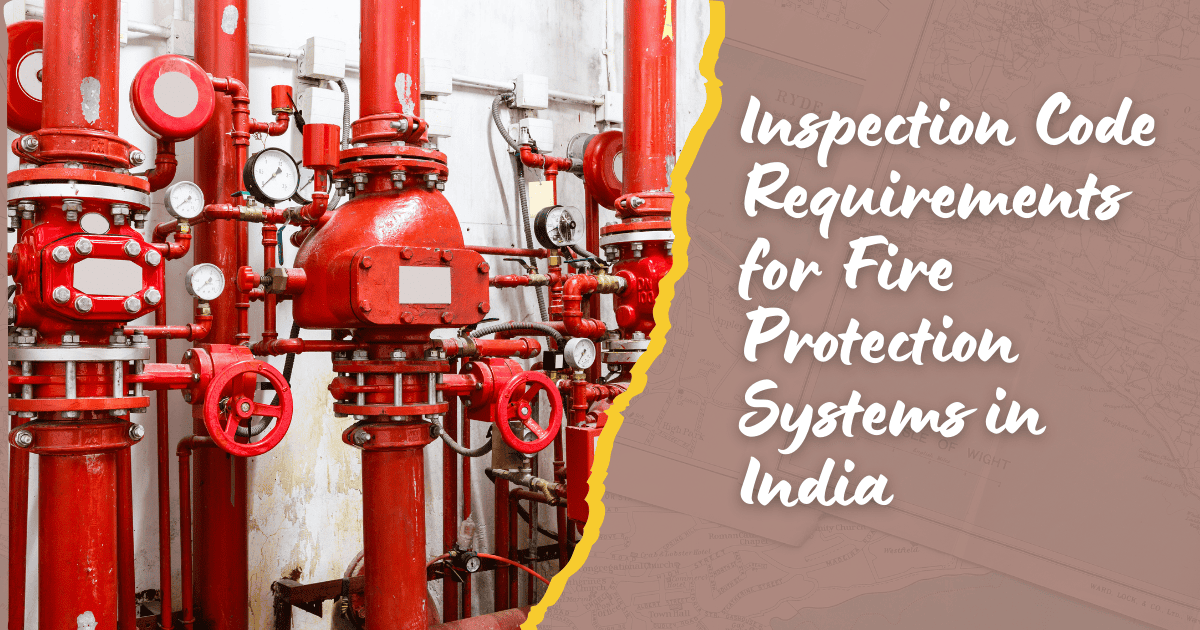
Inspection Code Requirements for Fire Protection Systems in India
Stay compliant with NBC fire codes in India. Learn fire protection system inspection requirements, frequency, and a practical checklist to protect lives and property.
Introduction
Imagine this: A fire breaks out in your building late at night. The sprinklers don’t activate, the alarms remain silent, and by the time help arrives, the damage is catastrophic. Sadly, this happens across India every year — not because technology failed, but because inspections were missed, records weren’t maintained, or systems weren’t properly serviced.
Whether you’re a property owner, business manager, resident, government official, fire department officer, construction company, insurer, or investor, fire protection system inspections are more than just a compliance checkbox. They are the difference between life and death, and between saving a business or losing everything.
In this guide, we’ll cover inspection code requirements for fire protection systems in India, including NBC and BIS standards, inspection frequency, a practical checklist, and legal and financial risks of non-compliance.
Why Fire Protection System Inspections Matter?
Regular inspections aren’t just legal obligations — they are your first line of defense.
- Life Safety Comes First: Fire protection systems save lives. Inspections ensure sprinklers, alarms, and extinguishers are always ready.
- Compliance with Laws: NBC 2016 and local fire department regulations require periodic inspections. Non-compliance can lead to fines or revoked Fire NOCs.
- Financial Protection: Fires are costly. Regular inspections protect insurance coverage and can reduce premiums.
- Business Continuity & Reputation: Reduces downtime and shows stakeholders you take safety seriously.
- Investor & Community Confidence: Compliance protects brand reputation and maintains trust.
Key Fire Protection Codes & Standards in India
Fire protection requirements are shaped by national standards, local regulations, and building type.
- National Building Code of India (NBC 2016, Part 4: Fire & Life Safety)
- Sprinkler and hydrant systems
- Alarm and detection systems
- Emergency lighting, signage, and evacuation planning
- Bureau of Indian Standards (BIS)
- IS 2190: Portable fire extinguishers
- IS 15301: Fire pump testing and maintenance
- Local Fire Codes & State Fire Departments
- States like Tamil Nadu, Maharashtra, Karnataka, and Delhi have specific rules. Inspections are mandatory for Fire NOC renewal.
- Insurance & Corporate Requirements
- Many insurers and investors require inspection proof before coverage or funding.
Types of Fire Protection Systems That Require Inspection
- Automatic Sprinkler Systems: Inspect for leaks, corrosion, blockages, and water flow.
- Fire Alarm & Detection Systems: Smoke detectors, heat detectors, and call points; test for functionality per IS 2189.
- Portable Fire Extinguishers: Accessible per floor; monthly visual checks and annual refills per IS 2190.
- Hydrant & Standpipe Systems: Inspect valves, hoses, and pumps.
- Fire Pumps & Water Storage: Weekly testing (IS 15301), maintain minimum water reserves.
- Special Suppression Systems: FM-200, Novec, CO₂, and kitchen hood systems; test and refill periodically.
Inspection Frequency Requirements
|
System |
Frequency |
Key Activities |
|
Fire Pump (Diesel/Electric) |
Weekly |
No-load test run, check fuel, battery, power supply |
|
Sprinklers & Valves |
Monthly/Quarterly |
Visual inspection for leaks, corrosion, obstruction |
|
Fire Alarm System |
Quarterly |
Sounder test, detector response test, panel check |
|
Fire Extinguishers |
Monthly / Annually |
Pressure, nozzle, hose, annual refill |
|
Hydrants & Hose Reels |
Half-Yearly/Yearly |
Pressure testing, hose reel unwinding and flow test |
|
Emergency Lighting/Exit Signs |
Monthly |
Functional test, battery backup check |
|
Tank Water Level |
Weekly |
Verify minimum reserve capacity |
Tip: Maintain a digital fire logbook; many state fire departments require records for Fire NOC renewal.
Step-by-Step Fire Protection System Inspection Checklist
- Control Valves: Open, sealed, and lubricated.
- Sprinklers: Check for rust, paint, and obstructions.
- Alarms: Test panel, detectors, and manual call points. Ensure signals reach monitoring stations.
- Pumps: Run weekly tests; record pressure, motor current, and noise.
- Extinguishers: Check pressure, nozzle, hose, expiry, and accessibility.
- Hydrants: Inspect hoses, valves, and test water flow.
- Signage & Lighting: Verify exit signs and emergency lights.
- Documentation: Log results, faults, and corrective actions digitally.
Pro Tip: Use fire safety apps to schedule inspections, track results, and store reports.
Common Inspection Challenges & Solutions
- Limited Access: Keep equipment rooms accessible.
- Poor Documentation: Use digital logs.
- Budget Constraints: Treat safety as essential; regular inspections save money long-term.
- Coordination Issues: Maintain an annual calendar.
- Skill Gaps: Train staff and hire licensed contractors.
Legal & Financial Consequences in India
- Fines & Fire NOC Revocation: Non-compliance can lead to penalties or closure.
- Insurance Denial: Claims may be rejected if inspections weren’t conducted.
- Business Shutdown: Operations may halt until compliance is restored.
- Criminal Liability: Negligence can lead to legal action under IPC.
- Example: In 2023, multiple high-rises in Delhi and Mumbai faced heavy fines and temporary closures due to expired Fire NOCs and non-functional hydrants.
Partnering with Professionals
- Third-Party Audits: Certified auditors ensure NBC/BIS compliance.
- Annual Maintenance Contracts (AMC): Turnkey inspection, repair, and documentation services.
- Fire Department Collaboration: Pre-fire planning walkthroughs speed up emergency response.
Future Trends in Fire Protection Inspections in India
- IoT-Enabled Monitoring: Real-time alerts and remote monitoring.
- Predictive Maintenance: AI predicts system failures proactively.
- Paperless Compliance: Digital logs for Fire NOC renewal.
- ESG & Investor Focus: Compliance increasingly tied to ESG reporting.
Conclusion & Call-to-Action
Fire protection system inspections are non-negotiable. They safeguard lives, property, and business continuity. Whether managing a housing society, hospital, factory, or IT park, inspections prevent tragedies and legal complications.
Take action today:
- Review your last inspection report.
- Schedule pending checks with licensed contractors.
- Digitize records for hassle-free Fire NOC renewal.
FAQ Section
How often should fire extinguishers be inspected in India?
Monthly visual check and annual refill per IS 2190.
What is NBC 2016 Part 4?
It’s the section of the National Building Code that covers Fire & Life Safety requirements for all building types.
Who can perform fire system inspections?
Licensed fire contractors, certified safety officers, or fire department-approved agencies.


