
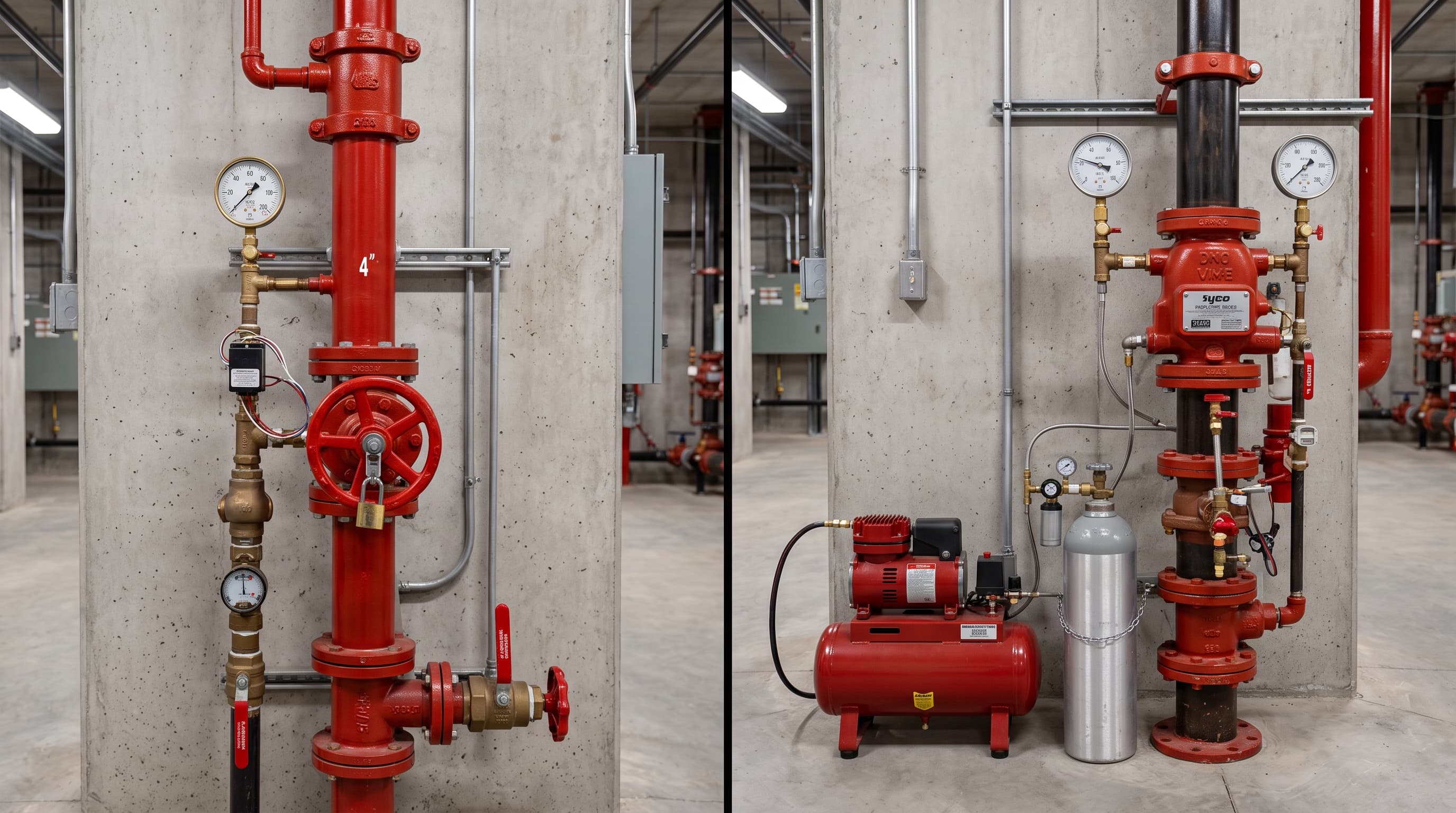
Wet vs. Dry Fire Sprinkler Systems: Which Is Right for Your Building?
Wet vs. dry fire sprinkler systems compared: how each works, costs, pros/cons, and which fits your building. Get expert guidance before you decide.
If you are building or upgrading a factory, warehouse, or office in Tamil Nadu, one question always comes up during fire safety planning: Should you install a wet pipe sprinkler system or a dry pipe sprinkler system?
Both systems do the same basic job. They sense fire and release water to control it. But they work in very different ways, and choosing the wrong one can cost you money, damage your property, or even fail to protect people when a fire actually breaks out.
In this guide, we explain how each system works, where each one fits best, and how to decide which one suits your building. We also look at why this choice matters differently for businesses in Chennai, Coimbatore, Trichy, and Hosur compared to buildings in colder countries.
Quick Answer
A wet pipe system keeps water in the pipes at all times. It reacts to heat right away. A dry pipe system holds pressurized air in the pipes instead. It is mainly used to protect spaces where pipes could freeze, such as cold storage rooms. Most offices, showrooms, hospitals, and factories in Tamil Nadu should use a wet pipe system. Dry pipe systems are usually needed only for cold-chain or freezer spaces.
How Wet Pipe Sprinkler Systems Work
A wet pipe system is the simplest and most common type of fire sprinkler. The pipes stay filled with pressurized water at all times, right up to the sprinkler head.
When a fire starts, rising heat triggers the sprinkler head closest to the flames, and that one head opens and sprays water at once. There is no delay, because the water is already sitting inside the pipe.
This is why you see wet pipe systems almost everywhere, from IT parks in Chennai to textile showrooms in Coimbatore and hospitals in Trichy. The design is simple, so installation is fast, and upkeep is easy.
How Dry Pipe Sprinkler Systems Work
A dry pipe system looks the same from the outside, but the pipes hold pressurized air or nitrogen instead of water. This air pressure keeps a valve shut, and the valve blocks water from entering the pipe network.
When a fire triggers a sprinkler head, the air escapes, and the pressure drops. This drop opens the main valve, and water then rushes into the pipes and sprays out through the open head.
Because water has to travel from the valve to the sprinkler head, there is a short delay. It can take a few seconds, and in larger systems it can take up to a minute. This delay is the main trade-off of a dry pipe system.
Dry systems exist mainly to stop water from freezing inside the pipes. Most of Tamil Nadu never gets close to freezing outdoors, but some indoor spaces do, and that is where dry pipe systems matter here.
Where Freezing Actually Happens in Tamil Nadu
Even in a hot state like Tamil Nadu, some spaces stay well below the freezing point:
- Cold storage warehouses for frozen food, seafood, and ice cream. These are common near Chennai's food processing hubs.
- Pharma cold chain storage rooms. Many pharma and biotech units in Chennai and Hosur use these.
- Blast freezers and deep-freeze rooms in food export units near Chennai port.
- Frozen goods sections in large cold storage units in Coimbatore and Trichy. These serve local agriculture and dairy supply chains.
Does your building have any of these freezer zones? If so, that section needs a dry pipe system. This holds true even if the rest of the building uses a wet pipe system.
Pre-Action and Deluge Systems: Other Options Worth Knowing
Wet and dry are not the only two choices. Two related systems deserve a quick mention.
- Pre-action systems act like dry systems. But they need two triggers before water is released. They protect server rooms, data centers, and archive rooms, where a false spray of water would cost a lot. Many IT and BPO firms in Chennai and Coimbatore use pre-action systems in their server rooms for this reason.
- Deluge systems release water from every sprinkler head at once. Not just the one near the fire. These systems protect high-risk industrial areas, such as chemical plants or aircraft hangars. You will find them in some SIPCOT industrial estates near Hosur and Trichy.
We will cover these systems in more depth in a separate guide. For now, let's focus on the wet vs. dry choice. It covers most buildings.
Wet vs. Dry Sprinkler Systems: Side-by-Side Comparison
|
Factor |
Wet Pipe System |
Dry Pipe System |
|
Response time |
Instant |
A few seconds up to about 60 seconds |
|
Installation cost |
Lower |
Higher, due to the air compressor and extra valves |
|
Maintenance |
Simple, low upkeep |
More work, needs compressor checks and water drainage |
|
Freeze protection |
None |
Built in |
|
Water damage risk from leaks |
Slightly higher |
Slightly lower |
|
Best-fit spaces |
Offices, hospitals, schools, showrooms, and normal factories |
Cold storage rooms, blast freezers, open sheds, exposed structures |
Pros and Cons of Each System
Wet Pipe System: Pros and Cons
Pros
- Reacts to fire right away, with no delay
- Costs less to install and maintain
- Has fewer parts, so fewer things can go wrong
- Easy to get serviced, since local fire contractors know this system well
Cons
- Not fit for freezing spaces
- A pipe leak can cause water damage, since the pipes stay full at all times
- Not ideal for rooms with sensitive electronics or paper files, where a false water spray would cause heavy loss
Dry Pipe System: Pros and Cons
Pros
- Works safely in freezing or near-freezing spaces
- Carries a lower risk of water damage from a leak, since the pipes stay empty most of the time
- Suits unheated sheds, open storage, and freezer rooms
Cons
- Costs more to install, due to the air compressor and extra valves
- Responds more slowly during a real fire
- Needs regular checks on the compressor and drainage of water inside the pipes
- Has a more complex design, so more parts may need repair
Which System Should You Choose?
Look at the temperature inside the specific space, not just the city you live in. A factory in Coimbatore and a factory in Chennai will both need wet pipe systems on the main floor, because indoor temperatures there rarely drop close to freezing.
Choose a wet pipe system if:
- Your building holds a steady indoor temperature above 4°C all year round
- You run an office, retail showroom, school, hospital, hotel, or standard factory
- You want a lower cost for installation and upkeep
- Fast response time matters most, such as in a hospital ward or a busy showroom
Choose a dry pipe system if:
- You run a cold storage unit, blast freezer, or frozen food warehouse
- Part of your building is an open shed, loading dock, or exposed structure
- You run a pharma cold chain facility, common in the Hosur and Chennai industrial belts
- A part of your property could drop below 4°C, even for short periods
Mixed-use buildings often need both systems.
Take a cold storage company in Chennai as an example. It may use a wet pipe system for its office block. It may use a dry pipe system just for the freezer section. This setup is common. It is also the most practical choice for many businesses.
Cost Comparison
Wet pipe systems almost always cost less to install, since they need fewer parts. Dry pipe systems cost more upfront, because they need an air compressor, extra air devices, and special dry pipe valves.
Maintenance follows the same pattern. Wet systems are simple to service, needing just a routine check and a pressure test. Dry systems need more care, since the compressor needs checks, the water inside the pipes needs regular draining, and the dry pipe valve needs testing too. Over time, these steps add up to a higher running cost than a wet pipe system.
If your budget is tight and your building has no freezing zones, a wet pipe system is almost always the smarter and more cost-effective pick.
Fire Safety Codes You Should Know About
In India, fire sprinkler design usually follows the National Building Code (NBC) of India. It also follows Tamil Nadu Fire and Rescue Services rules. Many Indian fire consultants also refer to NFPA 13, a widely used international design standard.
Local approval also depends on your city's fire department. It depends on Tamil Nadu Fire and Rescue Services norms for your building type, whether that is a factory, warehouse, IT park, or hospital. Rules can change based on the type of use and the built-up area of your property.
Code rules change based on location and building type. So always get your sprinkler layout checked and approved by a licensed fire safety consultant before you install anything. Do not skip this step. It matters most for factories in industrial zones like SIPCOT Hosur or the Coimbatore industrial belt, where checks tend to be strict.
Can You Convert a Wet System to a Dry System?
Yes, but it is not a simple swap. Converting a system means changing valves. It may mean adding or removing an air compressor. It often means reworking parts of the pipe network. Only a qualified fire protection contractor should do this work, after a full check of your building.
Conversion is usually worth the cost only when part of a building changes use. For example, a regular warehouse bay might get converted into a cold storage room. That is when conversion makes sense.
Frequently Asked Questions
What is the main difference between wet and dry fire sprinkler systems?
A wet pipe system holds water in the pipes at all times for instant response. A dry pipe system holds pressurized air instead. Water enters only after a sprinkler head triggers.
Which is cheaper, wet or dry sprinkler systems?
Wet pipe systems cost less to install and maintain. Dry pipe systems cost more, due to extra gear like air compressors and special valves.
Do I need a dry pipe system in Tamil Nadu if it never freezes here?
Only if part of your building drops below the freezing point. This includes cold storage rooms, blast freezers, or pharma cold chain units. Regular offices and factories in Chennai, Coimbatore, Trichy, or Hosur almost always use wet pipe systems.
How do I know which system my building has right now?
Check the riser near your main water supply valve. A wet system connects straight to a single water valve. A dry system has an air compressor or nitrogen tank attached, to keep pressure in the pipes.
Are dry sprinkler systems slower to respond during a fire?
Yes, a bit slower. Water must travel from the main valve to the sprinkler head after the air pressure drops. This can take a few seconds, or up to about a minute in larger systems.
Can one build a system that uses both wet and dry systems?
Yes, this is common. Think of a warehouse with a normal storage area and a separate freezer section. Each zone gets the system that fits its temperature.
Talk to a Fire Safety Expert Before You Decide
Do not guess when choosing between a wet and dry sprinkler system. The right choice depends on your building's layout. It depends on the temperature in each section. It also depends on your local fire department's rules.
Are you setting up or upgrading fire protection in Chennai, Coimbatore, Trichy, Hosur, or anywhere else in Tamil Nadu? Get a proper site check done before you commit to either system. A qualified fire protection consultant can walk through your building. They can check which areas need freeze protection. They can design a system that fits both your budget and your local code rules.
Ready to protect your building the right way? Contact our fire protection team for a free site assessment. Find out exactly which sprinkler system fits your space.


