
Fire Doors: How to Choose, Install and Maintain Them
Choosing fire doors for a Hosur factory? Learn what a fire rating means, why the whole door set must be certified, and how to keep it working.
A fire door isn't a heavy door with a sticker. It's a certified assembly: leaf, frame, seals, hinges, latch and closer, tested together for a set number of minutes. It only protects your building if it's the right rating for its location, installed the way it was tested, and kept shut. Most fire doors fail for ordinary reasons: wedged open, closer removed, seal painted over, or the wrong rating chosen. This guide explains how to choose, install and maintain fire doors in a factory or warehouse in Hosur.
The Problem: Fire Doors Get Treated Like Ordinary Doors
In a busy plant, a fire door is just another door in the way. It gets wedged open for forklift traffic. The closer is taken off because it's annoying. A contractor repaints the frame, seals and all. Someone cuts a gap for a cable and doesn't seal it.
Each change looks small. But a rated door only works as certified. A wedged-open door, a removed closer, a painted-over intumescent seal, an oversized gap or a non-rated hinge can each cancel the rating in practice. That's true even if the certificate is still in the drawer.
The other common failure happens at purchase. Buyers accept a sticker, not a test report, or order a rating without checking what the building actually requires.
Choosing Fire Doors
What a Rating Means
A fire rating is the time, in minutes, that the complete door assembly resisted fire in a standard furnace test. Ratings of 30, 60, 90 and 120 minutes are common in India. A 1-hour door is tested for 60 minutes. A 2-hour door is tested for 120.
In India, fire-resisting doors are covered by IS 3614. The test evidence usually comes from a fire-resistance test to IS or EN 1634, or the older BS 476 Part 22. NBC 2016 Part 4 then decides where rated doors are required and what minimum rating applies. The rating depends on the building's occupancy, height and the door's location.
It's the Whole Set That's Certified
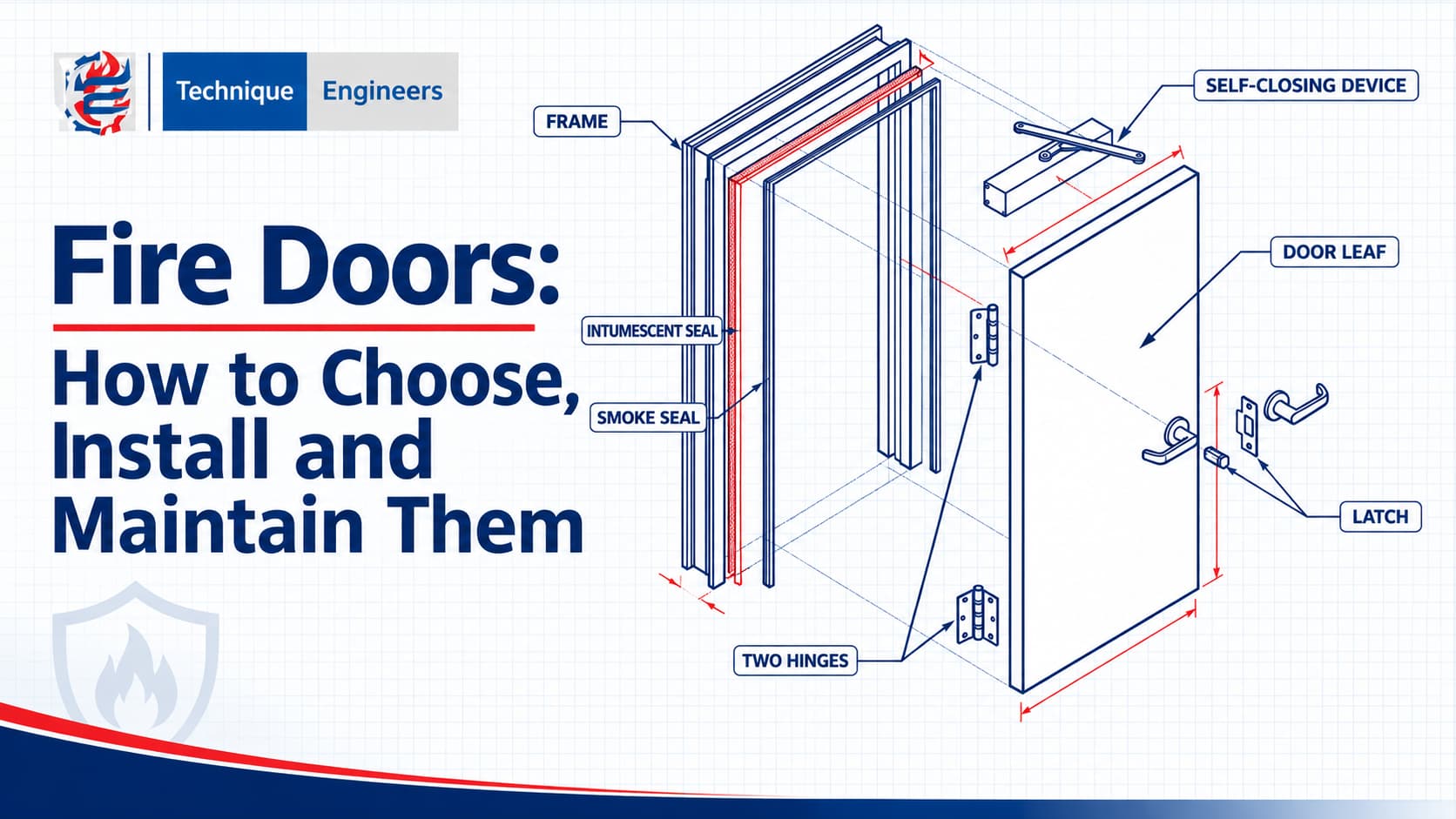
This is the point buyers miss most often. The rating belongs to the complete assembly, not just the leaf. A proper fire door set includes:
|
Part |
Why it matters |
|
Door leaf and core |
The core is what buys most of the minutes |
|
Frame |
Must be fixed into the type of wall it was tested with |
|
Intumescent seal |
Swells in heat to close the gap; part of the rating |
|
Smoke seal |
Limits smoke leaking around the door |
|
Hinges and latch |
Must be rated, not ordinary hardware |
|
Self-closing device |
The door has to close and latch by itself |
|
Glazing (if any) |
Must be fire-rated glass in a rated frame |
A 60-minute leaf without its intumescent seals is not a 60-minute door. Published guidance on Indian fire doors also says every fire door should carry both a smoke seal and an intumescent seal as standard.
Where Fire Doors Are Needed
NBC 2016 Part 4 calls for fire doors at the boundaries of protected escape routes, such as staircases and lobbies, as well as refuge areas and shaft enclosures. In a factory, also ask your designer about electrical and control rooms, plant rooms, and openings between production and storage areas.
Three Mistakes to Avoid
- Wrong rating for the opening. A 30-minute door where the code asks for more, or paying for a higher rating than the opening needs.
- A sticker instead of paperwork. Ask for the assembly test report and certificate, not just a label. A recognised test laboratory should have tested the full door set.
- No check after installation. Gaps, seals and closers need to be inspected once the door is fitted.
Installing Fire Doors
A good installation matches the tested set as closely as possible. That means:
- The frame is fixed into a wall of the type used in the test
- Seals are continuous and undamaged, with tight, even gaps as the test report requires
- Only rated hinges, latches and glazing are used
- The closer is adjusted so the door shuts fully and latches every time
- Any cutting or drilling on site is limited to what the manufacturer permits
- "Fire door, keep shut" signs are fitted where appropriate
Keep the installation record and the test certificate together. They're what an inspector will ask for, and they're part of the handover pack we describe in our guide to fire protection system commissioning.
The Forklift Problem
If doors on a busy route are being wedged open, the answer isn't to ignore it. Ask your designer about a hold-open device that releases when the fire alarm sounds, so the door closes on its own in an emergency. This is a common solution in plants where a closed door slows production.
Maintaining Fire Doors
Fire doors need regular attention because the faults are easy to create and easy to miss. NFPA 80, the US standard for fire doors, covers the whole life of the assembly, including installation, inspection, testing and maintenance. In India, fire door maintenance guides suggest a yearly compliance inspection for the NOC or audit by an accredited inspector, with quick checks in between.
A simple routine check covers:
|
Check |
What you're looking for |
|
Closes unaided |
Door shuts fully and latches without a push |
|
Gaps |
Even and small, with no new gaps from sagging |
|
Seals |
Present, undamaged and not painted over |
|
Hardware |
Rated hinges and latch in place, nothing loose |
|
Damage |
No holes, cuts or cracked glazing |
|
Obstruction |
Not wedged, tied back or blocked |
Common Faults and Fixes
|
Fault |
Why it matters |
Fix |
|
Closer removed or disconnected |
The door won't latch in a fire |
Refit a rated closer and adjust speed and latch |
|
Seal painted over |
The seal can't swell |
Replace that seal section and keep paint out of the groove |
|
Door wedged open |
No protection at all |
Fit a hold-open linked to the alarm |
|
Unrated hinge or hardware |
Weak point in the assembly |
Replace with rated parts |
Fire doors are one half of your passive protection, which we cover in our guide to passive vs active fire protection. They're also part of routine audits, as we explain in our post on fire and lift safety audits, and a standing item on our fire safety compliance checklist.
Why Facilities in Hosur Choose Technique Engineers
Technique Engineers supplies and installs fire doors for factories, warehouses, hospitals and commercial buildings across Hosur and Krishnagiri. We check which rating each opening needs, supply certified door sets, and install them to the tested configuration. Afterwards we include fire door checks in your AMC visits so faults get caught early. Whoever you buy from, ask for the assembly test report and keep it on file.
Frequently Asked Questions
Can I use a strong steel door as a fire door?
No. Strength isn't the same as fire resistance. A fire door is tested and certified as a complete assembly, with rated seals, hardware and closer. A plain steel door will not carry that certificate.
How do I know what rating I need?
It comes from NBC 2016 Part 4, based on the building's occupancy, height and where the door sits. Your fire protection designer can read this from your plans. Don't guess, and don't copy a rating from another building.
Can we wedge a fire door open for forklifts?
Not safely. A wedged door gives no protection. Use a hold-open device that releases when the fire alarm sounds, and check with your designer that it's suitable.
Can fire doors be painted?
The leaf and frame can generally be repainted, but never over the intumescent seals, labels or hardware. Paint on a seal stops it swelling in a fire.
How often should fire doors be inspected?
Do quick checks regularly and a formal inspection at least once a year. Also check after any building work, because renovations are when seals and gaps get damaged.
Technique Engineers supplies and installs fire doors, passive fire protection and complete fire protection systems for industrial and commercial facilities across Hosur and Krishnagiri. Contact us for a fire door survey of your site.


